Reflect on the subjects you enjoy the most and excel in. Your passion for a subject can enhance your learning experience and motivate you to perform better.
3. Future Aspirations IGCSE path
Think about your long-term goals and how your IGCSE subjects align with them. Research the prerequisites for the courses or careers you are considering, as some may require specific subjects.
Assess your strengths and weaknesses in various subjects. Choose subjects where you feel confident but also consider challenging yourself in areas that interest you.
5. Seek Advice
Consult with teachers, school counselors, or older students who have already gone through the IGCSE process. They can provide valuable insights and advice based on their experiences.
6. Balance Your Load
Try to strike a balance between core subjects needed for higher education and subjects that reflect your personal interests. Avoid overloading yourself with too many subjects at once.
7. Plan for Further Education
If you intend to pursue A-levels or equivalent courses, check which IGCSE subjects are recommended for those pathways. Schools often have specific subject requirements for advanced studies.
8. Keep it Flexible
Remember that your interests and career goals may evolve over time. Choose subjects that offer flexibility and allow you to explore different fields.
Conclusion
Take your time to research and meditate on your choices. Making a well-rounded decision can set a solid foundation for your future academic and career paths.
Mathematics Extended for IGCSE students often carries a mix of excitement and apprehension. For some, it represents an opportunity to excel and dive deep into the fascinating world of numbers. For others, it may seem like a challenge that requires extra effort. However, with the right approach and tools, Math Extended can be conquered effectively.
Understanding the IGCSE Math Extended Curriculum
The IGCSE Math Extended syllabus goes beyond the basics, introducing students to advanced topics such as quadratic equations, trigonometry, and probability. It is designed for students aiming for grades A* to C and provides a solid foundation for further studies in mathematics and related fields.
While the topics may appear challenging initially, they are structured to ensure a comprehensive understanding. Resources like the Cambridge IGCSE Mathematics Syllabus offer detailed outlines of the curriculum.
Why Is Math Extended Considered Tough?
Advanced Concepts Extended math introduces topics that demand higher-order thinking. For instance, mastering calculus and advanced geometry requires practice and dedication.
Time Management Balancing mathematics with other IGCSE subjects can feel overwhelming. Assignments, mock exams, and revisions demand excellent organizational skills.
Problem-Solving Focus The emphasis on solving complex problems can be daunting for students unfamiliar with analytical thinking.
Transforming Challenges into Opportunities
Despite its difficulties, Math Extended offers several benefits:
Developing Critical Thinking Skills Topics like algebra and trigonometry encourage students to think logically and solve problems systematically.
Preparation for Advanced Studies Success in IGCSE Math Extended equips students for higher-level mathematics in A-Levels or IB programs.
Real-World Applications Many professions, from engineering to finance, rely heavily on mathematical principles taught in Math Extended.
Practice Regularly Solving past papers is a proven way to prepare effectively. Websites like Save My Exams provide access to a wide range of practice materials.
Understand the Concepts Memorizing formulas isn’t enough. Understanding their derivation and application is crucial.
Use Technology to Your Advantage Tools like Cymath simplify complex calculations and help with step-by-step problem-solving.
Seek Help When Needed Joining study groups or hiring a tutor can clarify doubts and strengthen weak areas.
Stay Positive and Persistent Motivation plays a vital role in success. Celebrate small achievements and learn from mistakes.
Common Mistakes to Avoid
Skipping Steps In exams, skipping calculation steps can lead to errors. Show your work for better clarity and potential partial credit.
Neglecting Weak Topics Ignoring challenging topics like calculus or functions can affect overall performance. Dedicate extra time to these areas.
Overloading Study Time Overworking can lead to burnout. Balance study sessions with relaxation and recreational activities.
The Role of Parents and Teachers
Parents and teachers play an essential role in motivating and guiding students. Encouraging a growth mindset and providing constructive feedback can boost confidence.
Teachers can further support students by offering tailored feedback on assignments and creating a positive learning environment.
Conclusion
IGCSE Math Extended might seem challenging, but with determination and the right strategies, it transforms into an opportunity for academic and personal growth. Embrace the journey, use available resources, and believe in your ability to succeed.
Math Extended is an integral part of the IGCSE syllabus.Students often wonder, “Is Math Extended tough or manageable?”To excel in Math Extended, understanding the curriculum is crucial.Practice is essential for mastering Math Extended.Advanced topics in Math Extended can feel overwhelming.Math Extended builds a strong foundation for higher education.Many students enjoy the challenges of Math Extended.Problem-solving skills improve through Math Extended.Explore resources to succeed in Math Extended.Teachers often provide tips for excelling in Math Extended.
Mastering IGCSE Statistics is a vital area of study that empowers students to make sense of data and draw meaningful conclusions. In the context of the International General Certificate of Secondary Education (IGCSE), mastering statistics can open doors to numerous academic and career opportunities. This article will explore the essential concepts of IGCSE statistics, its importance, and strategies for success, all while highlighting the positive impact this subject can have on students’ lives.
Mastering IGCSE Statistics
Understanding IGCSE Statistics
IGCSE statistics covers a range of topics, including data collection, representation, analysis, and interpretation. Students learn how to handle data sets, calculate averages, understand variability, and apply probability concepts. This foundational knowledge is crucial, as statistics is applicable in various fields such as science, economics, social studies, and even everyday decision-making.
Key Concepts in IGCSE Statistics
Data Collection: Understanding how to gather data is the first step in statistics. This can involve surveys, experiments, or observational studies. Students learn about sampling methods, which are vital for ensuring that their data is representative of the larger population. For more on data collection methods, check out this resource from Khan Academy.
Data Representation: Once data is collected, it must be presented in a way that is easy to understand. This includes creating charts, graphs, and tables. Visual representation helps in quickly identifying trends and patterns. For example, bar charts and histograms are commonly used to display frequency distributions. You can learn more about data representation techniques at BBC Bitesize.
Descriptive Statistics: This involves summarizing and describing the main features of a data set. Key measures include mean, median, mode, and range. Understanding these concepts allows students to convey the essence of their data effectively. For further reading, visit Math is Fun.
Probability: Probability is the foundation of inferential statistics, allowing students to make predictions based on data. IGCSE students explore basic probability concepts, including independent and dependent events, and learn how to calculate probabilities using various methods. A great resource for probability concepts can be found at Khan Academy.
Inferential Statistics: This area allows students to make generalizations about a population based on sample data. Topics include hypothesis testing, confidence intervals, and significance levels. Understanding inferential statistics is crucial for making informed decisions based on data analysis. For more details, refer to Statistics How To.
The Importance of IGCSE Statistics Mastering IGCSE Statistics
Studying IGCSE statistics equips students with essential skills for the modern world. Here are a few reasons why mastering statistics is beneficial:
Critical Thinking: Statistics encourages analytical thinking. Students learn to question data sources, evaluate evidence, and make reasoned conclusions.
Real-World Applications: Statistics is everywhere—from healthcare to marketing. Understanding statistics helps students navigate a data-driven world, making informed decisions based on evidence.
Career Opportunities: Many professions require a solid understanding of statistics. Fields such as data science, economics, psychology, and even sports analytics value statistical knowledge. Mastering IGCSE Statistics
Strategies for Success in IGCSE Statistics
Practice Regularly: Like any other subject, regular practice is key to mastering statistics. Work through past exam papers and sample questions to build confidence. Mastering IGCSE Statistics
Utilize Online Resources: There are numerous online resources available, including video tutorials, interactive quizzes, and forums where students can ask questions. Websites like Edutopia provide excellent teaching strategies and resources. Mastering IGCSE Statistics
Study Groups: Collaborating with peers can enhance understanding. Discussing concepts and working through problems together can clarify difficult topics.
Seek Help When Needed: If you’re struggling with certain concepts, don’t hesitate to seek help from teachers or tutors. Online platforms like Khan Academy offer free resources and guidance.
Stay Organized: Keeping notes and organizing study materials can help streamline the learning process. Use charts and diagrams to visualize complex concepts. Mastering IGCSE Statistics
Conclusion Mastering IGCSE Statistics
Mastering IGCSE statistics is not just about passing an exam; it’s about equipping oneself with the skills to analyze and interpret data in a meaningful way. With the right resources and strategies, students can excel in this subject and apply their knowledge in various aspects of life. Embrace the journey of learning statistics, and unlock the potential it holds for your future.
Report Summary:
This comprehensive report focuses on the comparative relevance of mastering IGCSE Statistics as a path to success. It provides valuable insights for a general audience interested in understanding the importance and benefits of excelling in IGCSE Statistics.
Key Findings:
IGCSE Statistics: An Overview
Definition and scope of IGCSE Statistics
Importance of statistical knowledge in various fields
Relevance of IGCSE Statistics in real-life applications
Advantages of Mastering IGCSE Statistics
Enhanced analytical and problem-solving skills
Improved decision-making abilities
Increased employability prospects in data-driven industries
Preparation for higher-level statistical studies
Comparative Analysis: IGCSE Statistics vs. Other Subjects
Comparison of IGCSE Statistics with related subjects like Mathematics and Economics
Unique benefits and practical applications of IGCSE Statistics
Success Strategies for Mastering IGCSE Statistics
Effective study techniques and resources
Tips for understanding and applying statistical concepts
Practice exercises and sample questions for skill development
Testimonials and Success Stories
Real-life experiences of individuals who excelled in IGCSE Statistics
How mastering IGCSE Statistics contributed to their personal and professional growth
Conclusion:
Mastering IGCSE Statistics is a valuable path to success for individuals aiming to develop strong analytical skills, make informed decisions, and excel in data-driven industries. This report highlights the comparative relevance of IGCSE Statistics and provides insights for a general audience interested in pursuing this subject.
Keywords: Mastering IGCSE Statistics: Your Path to Success, IGCSE Statistics, comparative relevance, analytical skills, decision-making, employability, study techniques, success stories.
The International General Certificate of Secondary Education (IGCSE) is a highly respected, UK-based curriculum that has gained popularity worldwide. In the United States, students can access IGCSE courses through online platforms, providing flexibility and convenience for homeschooling or supplemental education. This article delves into the top online platforms for IGCSE in the USA, highlighting their features, benefits, and what makes them stand out.
The International General Certificate of Secondary Education (IGCSE) is a highly respected, UK-based curriculum that has gained popularity worldwide. In the United States, students can access IGCSE courses through online platforms, providing flexibility and convenience for homeschooling or supplemental education. This article delves into the top online platforms for IGCSE in the USA, highlighting their features, benefits, and what makes them stand out.
Pearson Edexcel Online: A Global Leader in Education
Pearson Edexcel Online is one of the most recognized online IGCSE platforms worldwide. With over 4 million students taking IGCSE exams each year, Pearson Edexcel has established a reputation for providing high-quality educational resources. Their online platform offers a range of IGCSE courses, including art, science, math, and language. The website includes study guides, practice papers, and revision resources, catering to different learning styles and abilities IGCSE in the USA.
Cambridge Assessment International Education (CAIE): Excellence in Education
CAIE is another prominent online platform for IGCSE, with a strong focus on providing a world-class education. They offer a broad range of IGCSE courses, including languages, humanities, social sciences, and natural sciences. The CAIE website features resources such as study guides, online courses, and exam revision materials, ensuring that students are well-prepared for their exams.
Homeschool Buyers Co-op (HBC): Affordable Learning Resources IGCSE in the USA
HBC is a non-profit organization providing online learning resources to homeschooling families in the USA. They offer a curated selection of IGCSE courses at discounted prices, making quality education more accessible to families. HBC partners with reputable education providers to offer a range of IGCSE courses, including science, math, and literature. IGCSE in the USA
Classical Conversations: A Community-Based Approach
Classical Conversations is a homeschooling community that offers online IGCSE resources and courses. Their unique approach emphasizes community-based learning, where students interact with peers and teachers through online forums and live classes. They provide a full range of IGCSE courses, including science, math, language arts, and social sciences.
Veritas Press is a Christian-based online platform that provides IGCSE courses, tailored to homeschooling students in the USA. They offer a comprehensive range of courses, including math, language arts, science, and social sciences. Veritas Press emphasizes the importance of character development and ethical values in their educational resources.
When selecting an online platform for IGCSE, consider the following factors:
Course offerings: Does the platform provide the courses you need?
Accreditation: Is the platform affiliated with a recognized accrediting body?
Quality of resources: Are the resources current, relevant, and engaging?
Support: What kind of student support does the platform offer?
Cost: What are the costs associated with using the platform?
By carefully evaluating these factors, you can find the best online platform for IGCSE studies in the USA, ensuring that your child receives a high-quality education that meets their unique needs and abilities.
Conclusion
Online platforms for IGCSE in the USA offer flexibility and convenience for homeschooling or supplemental education. Pearson Edexcel Online, Cambridge Assessment International Education (CAIE), Homeschool Buyers Co-op (HBC), Classical Conversations, and Veritas Press are top choices for students seeking IGCSE courses. By exploring these platforms and considering the necessary factors, you can make an informed decision about which one is best suited for your child’s educational needs.
Mathematics can be challenging, and every student knows that solving complex equations sometimes requires extra support. Cymath 2024 (https://www.cymath.com/) is a highly effective online math-solving tool, designed to assist students from various educational backgrounds in breaking down and understanding difficult math problems. This article will guide you through Cymath’s features and show you how it can be a valuable companion for any math student on their journey to mastering concepts.
Cymath 2024 is a powerful tool for students tackling complex math problems, making it an ideal resource to feature on home.notonlybook.com/. This app provides step-by-step solutions for a variety of topics, including algebra, calculus, and basic arithmetic, all by simply inputting equations or taking photos of written problems. Cymath uses advanced AI to break down each solution into clear, understandable steps, which is especially helpful for students preparing for exams or homework. By integrating Cymath into their study routines, students can boost their understanding and confidence in solving challenging problems independently. For home.notonlybook.com/, this resource aligns well with helping students achieve better results Cymath.
What Is Cymath?
Cymath 2024 is an online math problem-solving tool that covers a wide range of mathematical topics, from algebra and calculus to statistics and trigonometry. The platform is accessible both online and via mobile apps, making it easy for students to get math help anytime, anywhere. By inputting a math problem into Cymath, students receive a step-by-step solution that guides them through the logic and processes required to arrive at the correct answer Cymath.
How Cymath Helps Students Master Math
1. Step-by-Step Solutions
One of Cymath 2024 biggest advantages is its clear, step-by-step explanations. Unlike traditional calculators that only provide an answer, Cymath shows every stage of the solution process, making it an ideal study tool. Students can follow along with the steps to understand where they might have gone wrong and gain insights into effective problem-solving techniques.
Algebra: Simplification, factoring, and solving equations
Calculus: Differentiation and integration
Statistics and Probability: Basic concepts like mean, median, and mode
Trigonometry: Functions, identities, and solving triangles Cymath
This breadth makes Cymath a versatile tool for students of various grade levels and mathematical needs, from middle school up to college-level math.
3. Visual Interface and User-Friendly Design
The user-friendly design makes it straightforward for students to input complex equations and see a structured breakdown of the solution. Cymath’s mobile app interface is equally intuitive, offering the convenience of math support right from a smartphone. This feature is especially helpful for students who prefer a hands-on approach to learning.
4. Free and Premium Versions
Cymath 2024 offers a free version with core features that provide ample support for most math problems. For those seeking a more in-depth experience, Cymath Premium offers additional resources, including explanations of certain solution steps and ads-free browsing. This flexibility allows students to choose the version that best suits their needs and budget.
5. Helpful for Homework and Exam Preparation Cymath
By offering a deeper understanding of math problems, Cymath is a great aid for homework completion and exam preparation. Students can use it to review concepts and practice problem-solving, building confidence in their abilities over time. The practice-oriented approach helps reinforce learning and solidify understanding of key topics Cymath.
Using Cymath on home.notonlybook.com/
On home.notonlybook.com/, we understand the importance of accessible resources that enhance student learning. Integrating tools like Cymath 2024 into your study routine is a great way to complement the IGCSE and other resources available on our platform. While NotOnlyBook provides textbooks, past papers, and educational articles, Cymath adds an interactive component that helps students directly engage with and solve math problems.
How to Get Started with Cymath
Visit the Website or Download the App: Go to https://www.cymath.com or download the app from your device’s app store.
Input Your Problem: Type in a math problem, or use the app’s camera feature to scan a handwritten equation.
View the Solution Steps: Follow the detailed steps provided to understand the solution path and learn the reasoning behind each step.
Practice Regularly: Use Cymath regularly to practice various topics, strengthen your skills, and improve your math confidence.
Why Every Student Should Try Cymath
Whether you’re struggling with a difficult problem or just want to double-check your work, Cymath is an invaluable resource for students of all levels. Its accessibility, clear explanations, and range of topics make it an essential tool for students, parents, and tutors alike. For NotOnlyBook users, Cymath is the perfect supplement to our collection of educational materials, empowering students to take control of their math journey Cymath 2024.
Conclusion
Cymath stands out as an excellent support tool for students aiming to improve their math skills. By using Cymath alongside the resources at home.notonlybook.com/, students can gain a comprehensive understanding of math topics, enhance their study sessions, and tackle math with confidence. Whether you’re prepping for exams or seeking help with daily homework, Cymath is here to make math more manageable and enjoyable. Cymath 2024
This draft highlights Cymath’s functionality, benefits, and the ease with which students can incorporate it into their math studies on home.notonlybook.com/. Let me know if you need images or additional edits.
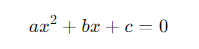
Quadratic equations are a fundamental topic in IGCSE Mathematics. Understanding how to solve and apply them is essential for success in various areas of math and real-world problem-solving. In this article, we’ll explore the basic form of quadratic equations, methods of solving them, and how they can be applied to everyday problems.
A quadratic equation is a polynomial equation of the form:ax2+bx+c=0ax^2 + bx + c = 0ax2+bx+c=0
where aaa, bbb, and ccc are constants, and xxx represents an unknown variable. The highest degree (or exponent) of xxx is 2, which defines it as a quadratic equation.
If a=0a = 0a=0, the equation becomes linear.
If a≠0a \neq 0a=0, the equation forms a parabola when graphed.
There are several methods to solve quadratic equations, each with its advantages depending on the specific equation.
Factoring: Factoring is one of the simplest methods, but it only works for certain equations. You rewrite the quadratic equation in a factorized form:ax2+bx+c=(mx+n)(px+q)=0ax^2 + bx + c = (mx + n)(px + q) = 0ax2+bx+c=(mx+n)(px+q)=0To solve the equation, set each factor to zero and solve for xxx:(mx+n)=0or(px+q)=0(mx + n) = 0 \quad \text{or} \quad (px + q) = 0(mx+n)=0or(px+q)=0Example:x2−5x+6=0⇒(x−2)(x−3)=0x^2 – 5x + 6 = 0 \quad \Rightarrow \quad (x – 2)(x – 3) = 0x2−5x+6=0⇒(x−2)(x−3)=0The solutions are x=2x = 2x=2 and x=3x = 3x=3.
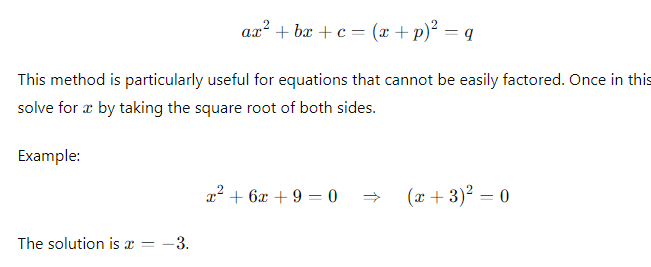
Completing the Square: Completing the square is a method that transforms the quadratic equation into a perfect square trinomial:ax2+bx+c=(x+p)2=qax^2 + bx + c = (x + p)^2 = qax2+bx+c=(x+p)2=qThis method is particularly useful for equations that cannot be easily factored. Once in this form, solve for xxx by taking the square root of both sides.Example:x2+6x+9=0⇒(x+3)2=0x^2 + 6x + 9 = 0 \quad \Rightarrow \quad (x + 3)^2 = 0x2+6x+9=0⇒(x+3)2=0The solution is x=−3x = -3x=−3.
Quadratic Formula: The quadratic formula is a universal method that works for any quadratic equation:x=−b±b2−4ac2ax = \frac{-b \pm \sqrt{b^2 – 4ac}}{2a}x=2a−b±b2−4acHere, the discriminant (b2−4acb^2 – 4acb2−4ac) determines the nature of the solutions:
If b2−4ac>0b^2 – 4ac > 0b2−4ac>0, there are two real solutions.If b2−4ac=0b^2 – 4ac = 0b2−4ac=0, there is one real solution.If b2−4ac<0b^2 – 4ac < 0b2−4ac<0, there are two complex (imaginary) solutions.
The discriminant (b2−4acb^2 – 4acb2−4ac) is an important part of the quadratic formula because it tells you how many solutions the equation has, and whether those solutions are real or complex.
Quadratic equations are used in a variety of real-world scenarios:
Projectile Motion: The path of a projectile (like a ball being thrown) follows a quadratic equation, where the height of the object is a function of time. Example: The equation h(t)=−4.9t2+vt+h0h(t) = -4.9t^2 + vt + h_0h(t)=−4.9t2+vt+h0 describes the height of a projectile in terms of time ttt, initial velocity vvv, and initial height h0h_0h0.
Optimization Problems: Quadratic equations are often used to find maximum or minimum values in optimization problems, such as finding the best price to sell a product or determining the maximum area for a given perimeter.
Area Calculations: Quadratics can be used to calculate areas of geometric shapes when they involve squared dimensions.
Quadratic equations are a critical component of IGCSE Mathematics. Mastering the different methods of solving quadratics, understanding the discriminant, and learning how to apply them in real-life situations will help you succeed in math and beyond. Whether through factoring, completing the square, or using the quadratic formula, you’ll have the tools you need to solve any quadratic equation with confidence.
Mathematics: Understanding Trigonometry is a crucial topic in the IGCSE Mathematics syllabus that deals with the relationships between angles and sides of triangles, particularly right-angled triangles. These relationships form the foundation for understanding various real-world problems, including navigation, architecture, and engineering. In this article, we will cover the basics of trigonometry, including trigonometric ratios, solving triangles, and applying trigonometry to real-life situations.
What is Trigonometry?
Trigonometry is the branch of mathematics that studies the relationships between the angles and lengths of triangles. Specifically, it focuses on right-angled triangles, where one angle is 90∘90^\circ90∘. In trigonometry, we explore how the angles of a triangle relate to the lengths of the sides.
The three main trigonometric functions, or ratios, are:
Sine (sin): The ratio of the opposite side to the hypotenuse.
Cosine (cos): The ratio of the adjacent side to the hypotenuse.
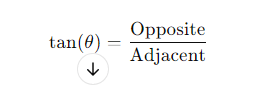
Tangent (tan): The ratio of the opposite side to the adjacent side.
These ratios allow us to solve for unknown sides or angles in right-angled triangles when some information is already known.
The three basic trigonometric ratios are fundamental in solving problems related to triangles. Here is how they are defined for a right-angled triangle:
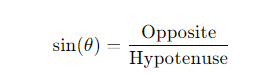
Sine:sin(θ)=OppositeHypotenuse\sin(\theta) = \frac{\text{Opposite}}{\text{Hypotenuse}}sin(θ)=HypotenuseOppositeThe sine of an angle is the ratio between the length of the side opposite the angle and the hypotenuse.
Cosine:cos(θ)=AdjacentHypotenuse\cos(\theta) = \frac{\text{Adjacent}}{\text{Hypotenuse}}cos(θ)=HypotenuseAdjacentThe cosine of an angle is the ratio of the length of the adjacent side to the hypotenuse.
Tangent:tan(θ)=OppositeAdjacent\tan(\theta) = \frac{\text{Opposite}}{\text{Adjacent}}tan(θ)=AdjacentOppositeThe tangent of an angle is the ratio between the side opposite the angle and the side adjacent to it.
Solving Right-Angled Triangles
Trigonometry is often used to solve right-angled triangles, where you may be required to find a missing side or angle.
Finding a Side: Suppose you know one angle (other than the right angle) and one side of a right-angled triangle. You can use one of the trigonometric ratios to find a missing side. For example, if you know the angle θ\thetaθ and the length of the hypotenuse, you can find the opposite side using:sin(θ)=OppositeHypotenuse⇒Opposite=sin(θ)×Hypotenuse\sin(\theta) = \frac{\text{Opposite}}{\text{Hypotenuse}} \quad \Rightarrow \quad \text{Opposite} = \sin(\theta) \times \text{Hypotenuse}sin(θ)=HypotenuseOpposite⇒Opposite=sin(θ)×Hypotenuse
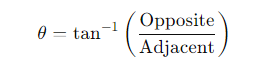
Finding an Angle: To find an unknown angle, you can use the inverse of the trigonometric ratios. For instance, if you know the opposite and adjacent sides, you can find the angle θ\thetaθ using:θ=tan−1(OppositeAdjacent)\theta = \tan^{-1} \left( \frac{\text{Opposite}}{\text{Adjacent}} \right)θ=tan−1(AdjacentOpposite)
Pythagoras’ Theorem: Another useful tool when solving triangles is Pythagoras’ Theorem, which states that in a right-angled triangle:a2+b2=c2a^2 + b^2 = c^2a2+b2=c2where aaa and bbb are the lengths of the two legs, and ccc is the length of the hypotenuse. This theorem allows you to find the length of one side when the other two sides are known.
Beyond right-angled triangles, trigonometric functions are defined using the unit circle, a circle with a radius of 1 centered at the origin of the coordinate plane. The unit circle helps extend the definition of trigonometric functions to any angle, including those greater than 90∘90^\circ90∘.
In the unit circle: Understanding Trigonometry
The x-coordinate of a point on the circle corresponds to the cosine of the angle.
The y-coordinate corresponds to the sine of the angle.
The tangent is the ratio of the sine to the cosine at any point on the circle.
This concept is crucial in advanced trigonometry and has applications in areas like physics and engineering. Understanding Trigonometry
Trigonometry is used in many fields, from architecture to astronomy. Some common real-life applications include: Understanding Trigonometry
Architecture and Engineering: Architects and engineers use trigonometry to calculate angles, lengths, and forces when designing structures such as bridges and buildings. For example, knowing the angles of inclination can help determine the height of a building or the length of a support beam.
Navigation: Pilots and sailors use trigonometry to determine distances and plot courses. By calculating angles based on positions and distances, trigonometry helps in navigation over both land and sea.
Physics and Astronomy: Trigonometry is essential for calculating the trajectories of objects, such as satellites or spacecraft, and for understanding the properties of waves, light, and sound.
Trigonometric identities are equations that are true for all values of the variables involved. These identities are useful in simplifying expressions and solving trigonometric equations. Understanding Trigonometry
Trigonometry is a versatile and essential branch of mathematics that extends beyond the classroom and into real-world applications. By mastering the trigonometric ratios, solving triangles, and understanding the unit circle, students gain the tools needed for advanced mathematical studies and various practical applications in science, engineering, and architecture.
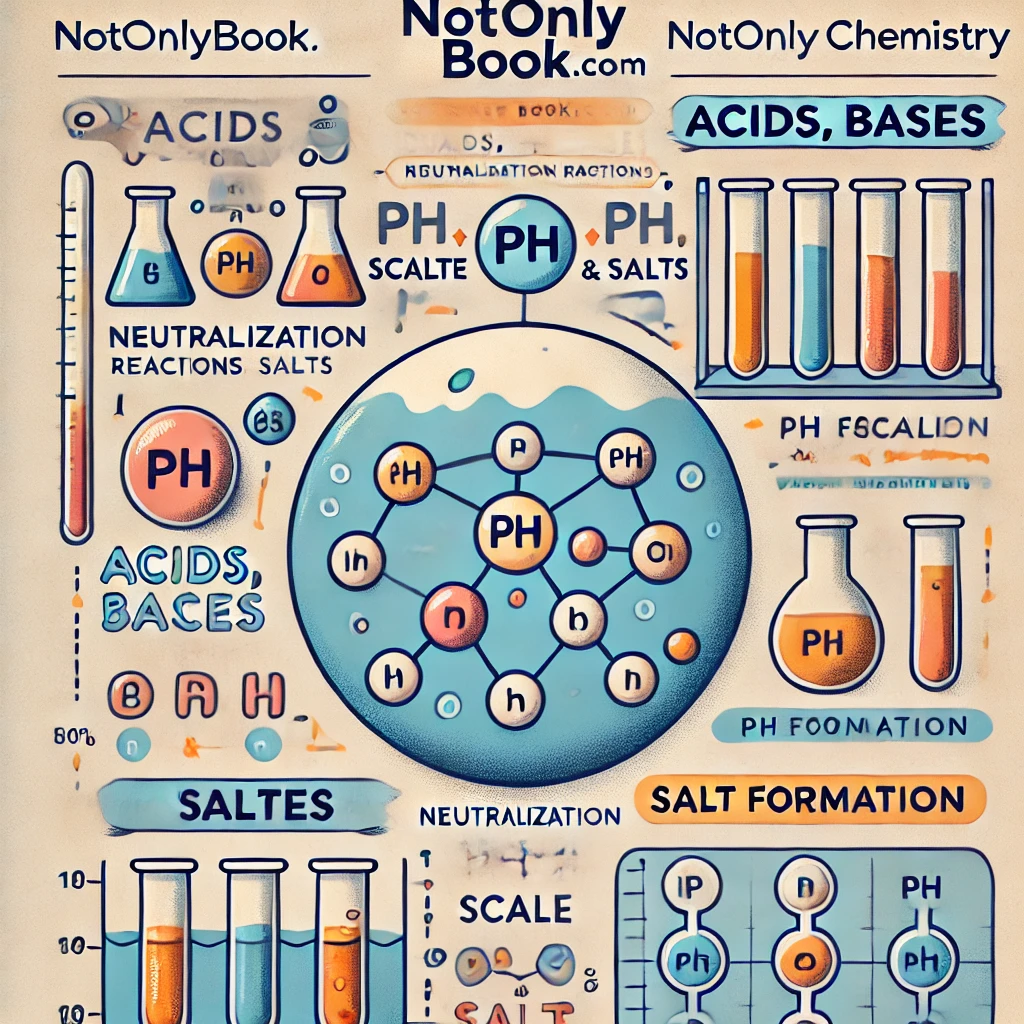
, bases, and salts are fundamental concepts in Chemistry and play a crucial role in various reactions, processes, and everyday applications. Understanding the properties, reactions, and uses of acids and bases, as well as how salts are formed, is a core component of the IGCSE Chemistry syllabus. This article will provide a detailed overview of these topics, exploring definitions, reactions, and real-world applications.
In Chemistry, and bases are substances that can donate or accept protons (H+^++ ions) in reactions. They are often classified based on their ability to either release hydrogen ions (for ) or hydroxide ions (for bases) when dissolved in water.
: An acid is any substance that donates H+^++ ions when dissolved in water. Common examples include hydrochloric acid (HCl), sulfuric acid (H2_22SO4_44), and nitric acid (HNO3_33). have a pH lower than 7, turn blue litmus paper red, and react with bases to form salts and water.
Bases: A base is any substance that accepts H+^++ ions or releases hydroxide ions (OH−^-−) when dissolved in water. Sodium hydroxide (NaOH) and potassium hydroxide (KOH) are common bases. Bases have a pH greater than 7, turn red litmus paper blue, and react with to neutralize them.
Alkalis: Alkalis are a specific type of base that is soluble in water and releases hydroxide ions (OH−^-−) in solution. Examples include sodium hydroxide and calcium hydroxide.
A neutralization reaction occurs when an acid and a base react to form water and a salt. This type of reaction is fundamental to many chemical processes, including digestion, industrial waste treatment, and agriculture.
The general equation for a neutralization reaction is:Acid+Base→Salt+Water\text{Acid} + \text{Base} \rightarrow \text{Salt} + \text{Water}Acid+Base→Salt+Water
For example, when hydrochloric acid reacts with sodium hydroxide, the products are sodium chloride (a salt) and water:HCl+NaOH→NaCl+H2OHCl + NaOH \rightarrow NaCl + H_2OHCl+NaOH→NaCl+H2O
Salts are ionic compounds formed from the neutralization of an acid by a base. They consist of a positive ion (from the base) and a negative ion (from the acid).
Common Types of Salts:
Sodium chloride (NaCl): Formed from hydrochloric acid and sodium hydroxide, it’s the most common salt, used in food seasoning.
Calcium carbonate (CaCO3_33): Found in limestone and chalk, it is used in construction and manufacturing.
Ammonium sulfate (NH4)2SO4(NH_4)_2SO_4(NH4)2SO4: Used as a fertilizer, formed from sulfuric acid and ammonia.
Uses of Salts:
In Food: Salts like sodium chloride are essential in food preservation and flavoring.
In Industry: Salts like ammonium nitrate are used in fertilizers, while others are used in manufacturing and cleaning products.
Understanding the chemistry of acids, bases, and salts is vital for grasping how many reactions occur in both industrial and biological systems. From the neutralization of stomach acid to the production of fertilizers, acids and bases play essential roles in daily life. The IGCSE syllabus ensures students are equipped with the knowledge to apply these concepts in practical and real-world contexts.
Advanced Concepts in IGCSE Organic Chemistry, as covered in the IGCSE syllabus, not only lays the foundation for understanding carbon-based compounds but also prepares students for more advanced chemistry concepts. As students progress, they encounter more intricate aspects of Organic Chemistry, which delve into the complexities of bonding, reactions, and the synthesis of larger molecules. This article explores advanced topics such as isomerism, polymerization, organic biochemistry, and the environmental impact of organic substances.
Isomerism in Organic Chemistry
“Advanced Concepts in IGCSE Organic Chemistry”
Advanced Concepts in IGCSE Organic Chemistry Isomerism is a concept where compounds with the same molecular formula have different structural arrangements, resulting in different chemical and physical properties.
Structural Isomerism: In this type, the atoms are arranged differently. For example, butane (C4H10C_4H_{10}C4H10) has two isomers: n-butane and isobutane, each having a different structure.
Geometrical (Cis-Trans) Isomerism: Commonly seen in alkenes, geometrical isomerism arises from the restricted rotation around the carbon-carbon double bond. For example, in but-2-ene, the two methyl groups can either be on the same side (cis) or opposite sides (trans).
Advanced Concepts in IGCSE Organic Chemistry Polymerization: The Chemistry of Plastics
Polymerization is essential in industrial applications, particularly for creating plastics.
Addition Polymerization: In this reaction, alkene monomers join to form long-chain polymers. Ethene (C2H4C_2H_4C2H4) forms polyethylene, a common plastic. Similarly, propene (C3H6C_3H_6C3H6) produces polypropylene.
Uses of Polymers: Polymers are vital in daily life, from packaging to textiles. However, the rise in plastic waste has led to environmental issues, highlighting the need for biodegradable polymers.
Organic Chemistry forms the basis for biochemistry, which studies the organic molecules essential for life.
Carbohydrates: Organic compounds like glucose are essential for energy. More complex carbohydrates, such as starch and cellulose, are made up of glucose monomers.
Conclusion Advanced Concepts in IGCSE Organic Chemistry
Organic Chemistry, especially as studied in the IGCSE syllabus, is an essential field that influences multiple aspects of life and industry. From understanding hydrocarbons and polymers to exploring the environmental challenges posed by organic compounds, students learn how chemistry shapes the world. Mastering these concepts opens up possibilities for tackling pressing global issues, such as climate change and plastic pollution, while also contributing to innovations in medicine and biochemistry. Advanced Concepts in IGCSE Organic Chemistry
By studying Organic Chemistry, students not only prepare for exams but also develop a deeper appreciation for the molecular mechanisms that govern the world around us. Advanced Concepts in IGCSE Organic Chemistry
These external links provide further resources and reading materials for students to dive deeper into the various topics covered in this article. Advanced Concepts in IGCSE Organic Chemistry
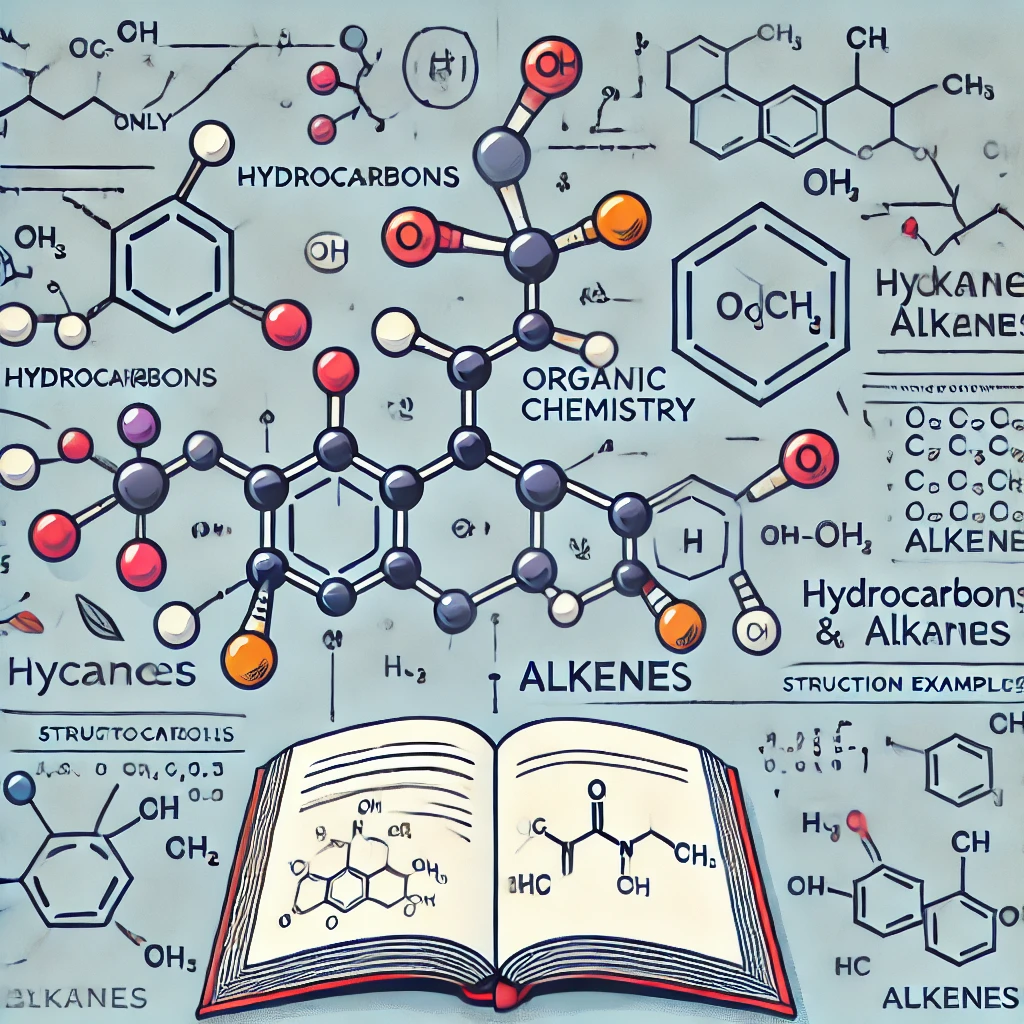
IGCSE Chemistry – Organic Chemistry Organic Chemistry is one of the key areas covered in the IGCSE Chemistry syllabus, focusing on the study of carbon-containing compounds. Organic compounds are crucial because they form the basis of life and play a vital role in industries such as pharmaceuticals, agriculture, and materials science. This article will explore the essential topics in Organic Chemistry, including hydrocarbons, functional groups, chemical reactions, and the significance of organic compounds in everyday life.
What is Organic Chemistry? IGCSE Chemistry – Organic Chemistry
Organic Chemistry is the branch of chemistry that deals with the structure, properties, and reactions of compounds that IGCSE Chemistry – Organic Chemistrycontain carbon. Although carbon is the defining element in organic chemistry, organic compounds also commonly include hydrogen, oxygen, nitrogen, sulfur, and halogens. The versatility of carbon lies in its ability to form strong covalent bonds with many elements, leading to a vast array of molecules with different chemical properties and functions.
In the IGCSE curriculum, Organic Chemistry introduces students to simple hydrocarbons and their derivatives. The course emphasizes both understanding the fundamental principles and applying that knowledge to real-world situations.
Hydrocarbons: Alkanes and Alkenes
The simplest organic compounds are hydrocarbons, which are molecules made entirely of hydrogen and carbon atoms. They are classified into different families based on their bonding and structure.
Alkanes: Alkanes are the simplest type of hydrocarbon, consisting of only single bonds between carbon atoms. They are saturated hydrocarbons because each carbon atom forms four single covalent bonds, either with hydrogen atoms or other carbon atoms. The general formula for alkanes is CnH2n+2C_nH_{2n+2}CnH2n+2. Examples include methane (CH4CH_4CH4), ethane (C2H6C_2H_6C2H6), and propane (C3H8C_3H_8C3H8). IGCSE Chemistry – Organic Chemistry
Alkanes are generally unreactive due to the strength of the carbon-carbon and carbon-hydrogen bonds, but they can undergo combustion, producing carbon dioxide and water. This makes them useful as fuels in everyday life.
Alkenes: Alkenes are unsaturated hydrocarbons that contain at least one carbon-carbon double bond. Their general formula is CnH2nC_nH_{2n}CnH2n. The presence of the double bond makes alkenes more reactive than alkanes. Ethene (C2H4C_2H_4C2H4) and propene (C3H6C_3H_6C3H6) are common examples of alkenes. IGCSE Chemistry – Mastering IGCSE ChemistryChemistry
Alkenes can undergo addition reactions due to the double bond, making them valuable in industrial processes such as polymerization. For example, ethene is the starting material for polyethylene, a common plastic used in packaging and containers. Mastering IGCSE Chemistry
A key concept in Organic Chemistry is the idea of functional groups, which are specific groups of atoms within molecules that are responsible for the characteristic chemical reactions of those molecules. Some important functional groups covered in the IGCSE syllabus include: Mastering IGCSE Chemistry
Alcohols: The alcohol functional group is characterized by an OHOHOH (hydroxyl) group attached to a carbon atom. Alcohols have the general formula CnH2n+1OHC_nH_{2n+1}OHCnH2n+1OH. Ethanol (C2H5OHC_2H_5OHC2H5OH) is a common example, widely used in beverages, as a fuel, and in solvents. Alcohols can undergo combustion, oxidation, and other reactions.
Carboxylic Acids: Carboxylic acids contain the carboxyl group (COOHCOOHCOOH) and have the general formula CnH2n+1COOHC_nH_{2n+1}COOHCnH2n+1COOH. They are weak acids and can react with bases to form salts. Ethanoic acid (CH3COOHCH_3COOHCH3COOH), commonly known as acetic acid, is a well-known carboxylic acid used in vinegar.
Esters: Esters are formed from the reaction between an alcohol and a carboxylic acid, resulting in the ester functional group (COOCOOCOO). Esters are known for their pleasant, fruity smells and are often used in fragrances and flavorings.
Reactions of Organic Compounds Mastering IGCSE Chemistry
Organic compounds can undergo a wide variety of chemical reactions, but some of the most important ones covered in the IGCSE syllabus are:
Combustion: As mentioned earlier, hydrocarbons like alkanes and alkenes can undergo combustion reactions, which are highly exothermic. Complete combustion of a hydrocarbon in the presence of excess oxygen produces carbon dioxide and water, while incomplete combustion may lead to carbon monoxide and soot (carbon) as byproducts.
Addition Reactions: Alkenes, with their double bonds, are highly reactive in addition reactions. In an addition reaction, the double bond is broken, and new atoms or groups are added to the carbon atoms. For example, when bromine water is added to an alkene, the bromine atoms add across the double bond, decolorizing the bromine water, which is a common test for unsaturation.
Esterification: This is a key reaction between a carboxylic acid and an alcohol to form an ester and water. The reaction is usually catalyzed by an acid, such as sulfuric acid. Esterification is an important industrial process for producing esters used in perfumes, solvents, and plasticizers.
Oxidation: Alcohols can be oxidized to form carboxylic acids. For example, ethanol can be oxidized to ethanoic acid, either by chemical reagents like potassium dichromate or by biological processes in fermentation.
Polymers and Plastics
A significant application of Organic Chemistry is in the production of polymers. Polymers are large molecules made up of repeating units called monomers. The IGCSE syllabus covers addition polymers, which are formed from alkenes.
Addition Polymerization: In this reaction, small alkene molecules (monomers) react together to form long-chain polymers. For instance, ethene undergoes addition polymerization to form polyethylene, one of the most common plastics used worldwide.
Uses of Polymers: Polymers are used in various industries, including packaging, textiles, and electronics. Understanding the chemistry behind polymers helps in addressing environmental issues such as plastic waste, as it opens the door to developing biodegradable alternatives.
Importance of Organic Chemistry
Mastering IGCSE Chemistry Chemistry is crucial to many aspects of modern life. From the production of fuels and plastics to the creation of medicines and food additives, organic compounds are essential in numerous industries. By understanding the chemistry behind these compounds, students can appreciate the science that impacts everything from healthcare to environmental sustainability.
In summary, IGCSE Organic Chemistry provides a foundational understanding of hydrocarbons, functional groups, and the chemical reactions of organic compounds. Mastering this subject equips students with knowledge that is applicable in many scientific and industrial contexts, fostering a deeper appreciation for the role of chemistry in our world.
Here are some external links you can include in your article on IGCSE Organic Chemistry: Mastering IGCSE Chemistry