Welcome to our ultimate guide for excelling in CIE Physics! Whether you’re a student gearing up for your exams or a parent looking to support your child’s studies, this post is designed to help you navigate the often daunting world of past papers. We understand that mastering Physics can be challenging, but with the right strategies and resources, you can conquer those past papers with confidence. In this guide, we’ll provide you with essential tips, effective study techniques, and insights into exam formats that will empower you to achieve your best. Let’s dive in and unlock the keys to success in CIE Physics!
Welcome to Excel in CIE Physics: The Ultimate Guide to Conquering Past Papers! Whether you’re a student gearing up for your exams or a parent looking to support your child’s studies, this post is designed to help you navigate the often daunting world of past papers. We understand that mastering Physics can be challenging, but with the right strategies and resources, you can conquer those past papers with confidence. In this guide, we’ll provide you with essential tips, effective study techniques, and insights into exam formats that will empower you to achieve your best. Let’s dive in and unlock the keys to success in CIE Physics!
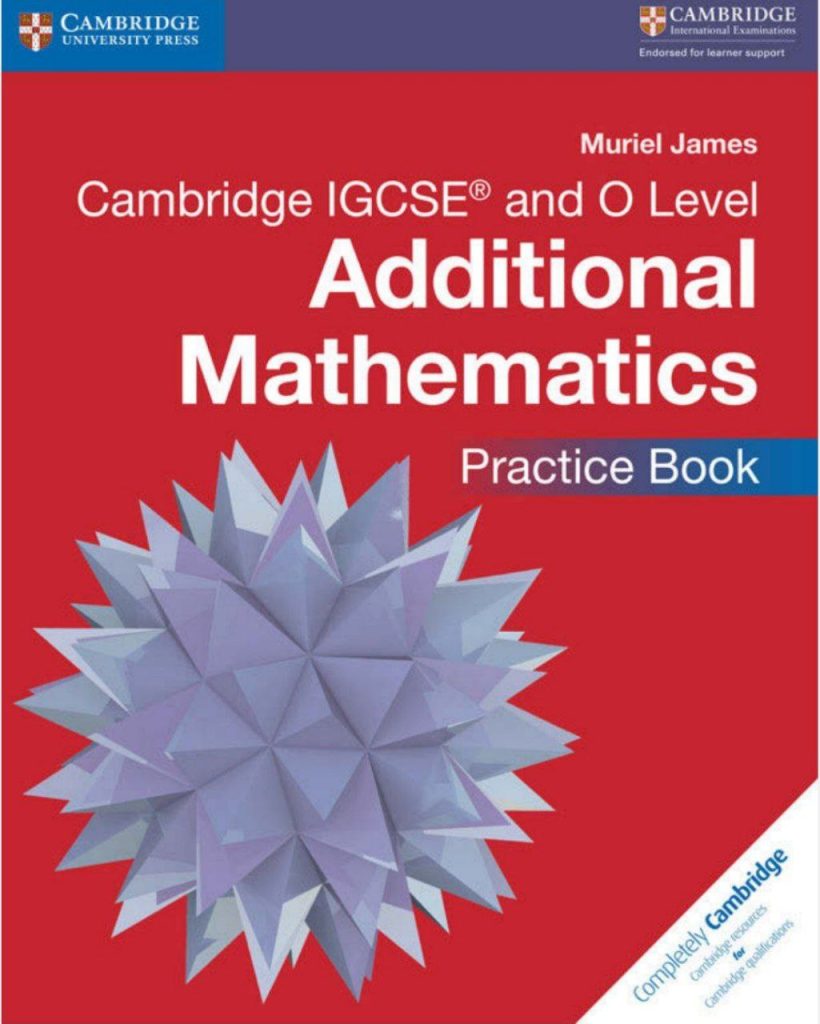
his article dives into the Cambridge IGCSE® and O Level Additional Mathematics Practice Book, a vital resource for students aiming to excel in advanced math topics covered in IGCSE syllabuses. It’s designed to reinforce core concepts with comprehensive exercises, supporting students in mastering challenging areas such as functions, trigonometry, and calculus.
Key Topics Covered
The book begins with foundational topics like sets and functions, progressing to more complex areas including:
Quadratic Equations and Inequalities
Logarithmic and Exponential Functions
Circular Measure
Differentiation and Integration
Each chapter includes objectives, worked examples, and exam-style questions to consolidate understanding.
Additional Mathematics Download the Book for Free!
Access the book now and deepen your mathematical understanding.
Mathematics is often seen as a challenging subject, especially at higher levels like the Cambridge IGCSE Additional Mathematics. This subject is pivotal for students who want to excel in fields that require strong analytical and mathematical skills, such as engineering, physics, and computer science. The Cambridge IGCSE Additional Mathematics Practice Book is a comprehensive resource designed to support students in mastering the subject. This article explores its key contents, learning benefits, and offers a free download link to the practice book.
Cambridge IGCSE Additional Mathematics (syllabuses 0606 and 4037) is an advanced course aimed at students who have already gained a strong understanding of basic mathematics. This course is rigorous and covers topics that lay the groundwork for further studies in calculus, trigonometry, and complex functions, which are foundational in many STEM (Science, Technology, Engineering, and Mathematics) fields.
The topics in Additional Mathematics challenge students with higher-level mathematical concepts and problem-solving strategies. Through this course, students develop:
Analytical skills: Dealing with complex equations, trigonometric functions, and calculus teaches students to approach problems analytically.
Logical reasoning: Many topics, like vectors and matrices, require logical thinking, which is beneficial across various fields.
Mathematical application skills: Practical applications of functions, calculus, and other areas are emphasized, which prepares students for real-world applications of math.
Key Contents of the Cambridge IGCSE Additional Mathematics Practice Book
The Cambridge IGCSE Additional Mathematics Practice Book is structured to align closely with the Cambridge syllabus. Each chapter begins with clearly outlined objectives, provides worked examples, and concludes with exam-style questions, enabling students to reinforce their understanding through continuous practice. Here’s an overview of some of the main topics covered in this book:
Functions and Relations:
Understanding and working with functions is foundational for advanced mathematics. Topics include one-one functions, inverse functions, and composite functions.
Students learn how to map various equations and analyze relationships between variables.
Quadratics and Polynomials:
This section delves into solving quadratic equations, understanding inequalities, and working with polynomial expressions. Quadratic functions are not only crucial in mathematics but also in physics, economics, and engineering.
Logarithmic and Exponential Functions:
Logarithmic and exponential functions have practical applications in science and finance. This book guides students through solving equations involving logarithms and exponentials, which are essential for understanding growth patterns, decay processes, and more.
Differentiation and Integration (Calculus):
Calculus is a critical tool for solving problems involving change, motion, and area under curves. Topics in differentiation include the gradient function, the product rule, and the chain rule, while integration covers indefinite and definite integrals and applications of integration.
Vectors and Matrices:
Vectors and matrices are powerful tools in physics and computer graphics. This section explores vector geometry, constant velocity problems, and matrix transformations.
Permutations and Combinations:
Probability theory and combinatorics are key areas in statistics and computer science. This book covers factorial notation, permutations, and combinations, which are foundational for understanding probability and arrangements.
Trigonometry:
Advanced trigonometry, including the general definition of an angle, trigonometric identities, and graphs of trigonometric functions, are explored. Trigonometry plays a significant role in fields requiring spatial understanding, such as architecture and engineering.
Learning Benefits of the Practice Book
The Cambridge IGCSE Additional Mathematics Practice Book is designed not only to teach but to reinforce learning. Each chapter includes:
Worked Examples: Step-by-step examples are provided to help students understand how to solve different types of problems, giving them a framework to tackle similar problems on their own.
Graded Exercises: Starting with simpler problems, the exercises progress to more challenging questions, encouraging students to build confidence in each topic.
Exam-Style Questions: The end-of-chapter questions simulate actual exam questions, preparing students for their final exams.
Answers and Explanations: Complete answers to each exercise and exam-style question are provided, allowing students to self-assess their understanding.
These features make the book suitable for self-study, empowering students to work independently and at their own pace. For students who require additional guidance, this book serves as an excellent supplement to teacher-led instruction, offering further practice and reinforcing concepts introduced in the classroom.
Study Tips for Cambridge IGCSE Additional Mathematics
Master the Basics First:
Before diving into complex topics like calculus or trigonometry, ensure you have a solid understanding of algebra, functions, and quadratic equations. These fundamentals are often prerequisites for more advanced topics.
Practice Consistently:
Mathematics is a skill that improves with practice. Set aside regular study sessions and work through problems consistently to build confidence and familiarity with each topic.
Understand the Logic Behind the Math:
Instead of just memorizing formulas, try to understand the reasoning and logic behind them. For instance, understanding why the chain rule works in differentiation can help you apply it more effectively.
Use Graphs and Diagrams:
Graphs can make complex problems more understandable, especially in topics like trigonometry and calculus. Visualizing problems often helps in grasping concepts more intuitively.
Focus on Exam-Style Questions:
Regularly practicing exam-style questions will help you become familiar with the format and timing of the actual exam. This practice can reduce anxiety and improve your performance.
Download the Cambridge IGCSE Additional Mathematics Practice Book for Free!
For more IGCSE study materials, check out our dedicated resources page on Not Only Book, where you can find additional materials, past papers, and study tips to excel in IGCSE exams.
External Resources to Support Your Learning
In addition to this practice book, here are some other excellent resources:
Wolfram Alpha – A powerful computational tool that helps solve and visualize complex equations.
Frequently Asked Questions
1. Is Cambridge IGCSE Additional Mathematics required for A-Level Math?
While it’s not mandatory, studying Additional Mathematics at the IGCSE level can significantly benefit students moving on to A-Level Mathematics, as it provides foundational knowledge for advanced topics like calculus and algebra.
2. How difficult is Cambridge IGCSE Additional Mathematics?
This course is challenging and is intended for students who have a strong grasp of basic mathematics. With consistent practice and the right resources, however, students can excel.
3. Can I study Additional Mathematics on my own?
Yes, with resources like the Cambridge IGCSE Additional Mathematics Practice Book and access to online tutorials, self-study is a viable option. However, having support from a teacher or tutor can be helpful, especially for difficult topics.
Final Thoughts
The Cambridge IGCSE Additional Mathematics Practice Book is an invaluable tool for any student looking to achieve excellence in mathematics. Its structured, comprehensive approach ensures that students not only understand each topic but also develop the skills to apply their knowledge effectively. Mathematics, while challenging, is a subject that opens doors to countless opportunities, and mastering it can be an incredibly rewarding experience.
Mastering Cambridge IGCSE Accounting 0452: Essential Tips and Resources for Success Accounting Past Papaers
The Cambridge IGCSE Accounting 0452 syllabus is designed to give students a clear understanding of the principles and techniques used in financial accounting. Covering key topics like double-entry bookkeeping, trial balance, financial statements, and accounting ratios, the course equips students with practical skills that are invaluable in both higher education and future careers in finance. For students preparing for this exam, using past papers and study guides is one of the most effective ways to boost confidence and improve exam performance.
Why Past Papers are Essential in Accounting 0452 Preparation Accounting Past Papaers
Understanding the Exam Format The Accounting 0452 exam consists of two components: Paper 1 (Multiple-Choice) and Paper 2 (Structured Questions). Paper 1 tests a broad range of accounting topics through multiple-choice questions, while Paper 2 focuses on more in-depth structured questions that require calculation and analysis. Practicing with past papers helps students become familiar with these formats, ensuring there are no surprises on exam day.For more information about the Cambridge IGCSE Accounting 0452 syllabus, you can visit the official Cambridge website.
Building Strong Foundations in Accounting Accounting is a subject that relies heavily on understanding the core principles of double-entry bookkeeping. By practicing with past papers, students reinforce their understanding of accounting basics, such as debits and credits, journal entries, and ledger accounts. Reviewing past papers also highlights how certain topics are weighted and which concepts are most frequently tested, allowing students to focus their revision efforts more efficiently.
Learning the Importance of Time Management The ability to manage time effectively is crucial for the Accounting 0452 exam, especially when it comes to completing calculations and preparing financial statements under timed conditions. Through consistent practice with past papers, students learn to allocate their time wisely, ensuring that they leave enough time to review their answers and check for any errors in their calculations.To access free Accounting past papers, visit our IGCSE Accounting Past Papers section, where you can download past exams to practice.
Identifying Areas for Improvement One of the key benefits of using past papers is the ability to identify weak areas. Perhaps a student excels in preparing balance sheets but struggles with calculating ratios or interpreting financial data. Past papers help pinpoint these gaps in knowledge, enabling students to adjust their revision strategies accordingly.
Developing Exam Techniques The mark scheme is an essential tool for understanding what examiners are looking for in responses. By practicing past papers and reviewing the corresponding mark schemes, students can fine-tune their answers to meet the specific requirements of the exam. For example, structured questions often require precise calculations, and past papers allow students to practice presenting these calculations in a way that maximizes marks.
Key Resources for IGCSE Accounting 0452 Preparation Accounting Past Papaers
Textbooks and Study Guides A solid understanding of the Cambridge Accounting syllabus can be achieved through reliable textbooks and study guides. Websites like home.notonlybook.com/ provide access to a range of study materials, including textbooks, revision notes, and exam tips that help students grasp key concepts in accounting.
Interactive Learning Tools In addition to past papers, students can benefit from interactive learning tools like quizzes, video tutorials, and online exercises. These tools help reinforce learning through repetition and provide a more dynamic approach to studying accounting principles. Many online platforms, such as Khan Academy and BBC Bitesize, offer free educational resources tailored to IGCSE students.
Study Groups and Peer Learning Collaboration with peers can be a valuable way to deepen your understanding of accounting topics. Study groups allow students to discuss challenging concepts, compare notes, and explain difficult topics to one another. Peer learning also promotes accountability and encourages consistent revision.
How to Make the Most of Past Papers
Practice Under Exam Conditions To simulate the real exam, set a timer and attempt past papers under exam conditions. This not only helps improve time management but also reduces exam-day stress by familiarizing students with the pressure of completing tasks within a set timeframe.
Use Mark Schemes to Learn from Mistakes After completing a past paper, review the answers using the mark scheme. This step is crucial in understanding where you went wrong and how to correct those mistakes. By learning from errors, you can improve your accuracy in future exams.
Track Your Progress Keep a record of your scores from past papers to track improvement over time. This allows you to identify which areas of the syllabus need more attention and which ones you’ve mastered.
Best Online Resources for IGCSE Accounting 0452
Websites like home.notonlybook.com/ are a great resource for free access to past papers, revision guides, and helpful accounting tips. Additionally, the Cambridge International website offers useful information on exam specifications and the latest updates regarding IGCSE exams.
Conclusion
The Cambridge IGCSE Accounting 0452 syllabus is a practical and valuable course that provides students with essential financial skills. With consistent practice using past papers and other revision tools, students can significantly improve their exam performance and build a strong foundation for future studies in accounting and finance. Whether you’re working through balance sheets, cash flow statements, or accounting ratios, using the right resources will help you achieve success.
IGCSE Accounting (0452) is a key subject for students aspiring to gain a deep understanding of financial principles, accounting practices, and their application in real-world scenarios. One of the best ways to prepare for this examination is through past papers, which give students a chance to familiarize themselves with the exam format, common questions, and the marking scheme. In this article, we will explore how to use IGCSE Accounting past papers effectively, their importance, and the resources available to help students excel in their exams.
Why Are Past Papers Important? Past Papaers IGCSE Accounting
Past papers provide invaluable insights into the structure and content of IGCSE Accounting exams. They offer several advantages for students who are preparing for the exam:
Understanding Exam Format: Past Papaers IGCSE Accounting The IGCSE Accounting exam typically consists of two papers:
Paper 1: A multiple-choice paper.Paper 2: A structured, written exam that includes questions on accounting concepts, preparation of financial statements, and interpretation of financial information.
Working through past papers helps students understand the layout and timing of the papers.
Familiarity with Question Types: Past papers expose students to the range of questions they might face. They cover all key areas of the syllabus, such as bookkeeping, financial statements, and control accounts. By practicing with past papers, students can recognize common question patterns and learn how to approach different types of questions.
Marking Scheme Insights: By reviewing the marking schemes provided with past papers, students can gain an understanding of how examiners award marks. This helps students structure their answers more effectively and ensures they focus on the key points that will earn them marks.
Time Management Practice: The exam requires students to complete various tasks within a limited time frame. Past papers offer the perfect opportunity to practice managing time efficiently during the exam. Timed practice sessions with past papers simulate exam conditions, helping students improve their speed and accuracy.
How to Use Past Papers for Revision Past Papaers IGCSE Accounting
Start Early: It is important to begin practicing with past papers well in advance of the exam. Starting early allows students to identify areas of weakness and focus on improving them over time.
Analyze Marking Schemes: After completing a past paper, always refer to the official marking scheme. This helps students understand how answers should be structured and what examiners look for in a well-written response.
Identify Common Questions: By working through several years of past papers, students can identify common themes and frequently asked questions. Topics such as financial statement preparation and control accounts often appear in different formats across multiple years.
Simulate Exam Conditions: When practicing with past papers, aim to replicate exam conditions by setting a timer and working without interruptions. This will help students get used to the time pressure of the actual exam and improve their time management skills.
Review Mistakes: After completing each past paper, it is important to review mistakes carefully. Understand where points were lost and revisit those areas in the textbook or class notes to strengthen understanding.
Several online resources provide access to IGCSE Accounting past papers, marking schemes, and examiner reports. These resources are essential for any student preparing for the exam: Past Papaers IGCSE Accounting
Cambridge International Website: Cambridge International provides a wide range of past papers for all subjects, including Accounting (0452). Students can download past papers and marking schemes from their official website.
Save My Exams: Save My Exams offers revision notes, model answers, and past paper solutions for IGCSE Accounting. They also provide detailed video explanations for some of the trickier questions.
IGCSE Guide: IGCSE Guide is another great platform that offers past papers, revision notes, and exam preparation tips for IGCSE Accounting and other subjects.
GCE Guide: GCE Guide offers a comprehensive collection of IGCSE past papers for all subjects, including Accounting. This site is an excellent resource for both students and teachers.
By regularly practicing with past papers, students develop their exam technique, gain confidence, and improve their performance. Past papers offer a realistic preview of what to expect in the exam, reducing the likelihood of surprises on the day.
Additionally, past paper practice helps students:
Improve problem-solving skills: By working through different types of accounting problems, students learn how to apply concepts effectively.
Gain exam familiarity: The more past papers a student completes, the more familiar they become with the exam format, question styles, and timing.
Boost confidence: Practicing with real exam papers boosts confidence, especially when students see their progress over time.
Conclusion
IGCSE Accounting (0452) past papers are one of the best revision tools available for students. By regularly working through them, analyzing marking schemes, and simulating exam conditions, students can improve their exam performance and achieve their best possible results. Access to past papers, combined with effective study habits, will put students in a strong position to excel in their IGCSE Accounting exams.
IGCSE Accounting (0452) – Mastering Past Papers for Exam Success Past Papaers Accounting-0452
The IGCSE Accounting (0452) course is a comprehensive subject that equips students with the knowledge and skills to understand the principles of financial accounting. A key strategy to prepare effectively for the exam is to practice with past papers. Past papers allow students to familiarize themselves with the exam format, identify recurring topics, and hone their answering techniques. This article provides guidance on how to effectively use IGCSE Accounting past papers to achieve top marks.
Why Use Past Papaers Accounting-0452 ?
Past Papaers Accounting-0452 are one of the most valuable resources available to students for several reasons:
Familiarity with Exam Structure: Each IGCSE Accounting exam typically includes questions that assess a range of topics such as financial statements, bookkeeping, control accounts, and the interpretation of financial ratios. Practicing with past papers ensures students become familiar with the structure, including the types of questions asked and the mark allocation.
Recognizing Question Patterns: Many questions are repeated in different forms across past papers. By working through multiple past exams, students can identify recurring question types and learn how to approach them confidently.
Timing and Speed: The exam requires students to complete several tasks within a limited time. Practicing with past papers under timed conditions helps students manage their time more efficiently during the actual exam.
Marking Scheme Insights: Understanding how marks are awarded is crucial. By reviewing the marking schemes associated with past papers, students can learn how to structure their answers to meet the examiners’ expectations.
Key Topics Covered in IGCSE Accounting Past Papers
Past Papaers Accounting-0452 covers a broad range of topics, which are regularly tested in the exam. Here are the key areas students will encounter in past papers:Past Papaers
Bookkeeping and Double Entry Accounting:
Understanding the double-entry system is fundamental in IGCSE Accounting. Past papers often include tasks where students must record transactions in ledger accounts, journals, or prepare trial balances.
Preparation of Financial Statements:
Financial statements such as income statements, balance sheets, and cash flow statements are tested regularly. Students are expected to prepare these for different business entities such as sole traders, partnerships, and limited companies.
Adjustments for Depreciation and Bad Debts:
Adjusting accounts for depreciation, bad debts, accruals, and prepayments are important skills tested frequently in past papers. Students should be familiar with how to account for these adjustments.
Control Accounts and Bank Reconciliation:
Control accounts (such as sales and purchase ledger control accounts) and bank reconciliation are often featured in past exams. Practicing these topics through past papers helps in mastering how to reconcile discrepancies between bank statements and cash book records.
Accounting Ratios and Interpretation of Financial Statements: Past Papaers
Students are tested on their ability to calculate and interpret key financial ratios, including profitability ratios (e.g., gross profit margin) Past Papaers and liquidity ratios (e.g., current ratio). These calculations help evaluate the financial health of a business.
How to Use Past Papaers Accounting-0452 for Exam Preparation
Start Early: Begin using past papers at least a few months before the exam to identify areas of weakness. This allows ample time to review difficult topics and strengthen your understanding.
Work Under Exam Conditions: To simulate real exam conditions, set a timer and attempt past papers without any interruptions. This helps you get used to the pressure of the exam and improves time management.
Review Marking Schemes: After completing a past paper, check your answers against the official marking scheme. This helps you understand how marks are allocated and what the examiners are looking for in your answers.
Target Weak Areas: After practicing several past papers, you may notice particular topics where you consistently struggle. Focus on revising those topics and reattempt related questions from different past papers.
Repetition for Mastery: Past Papaers The more you practice, the better your performance will be. Repeating past papers not only enhances your knowledge but also builds confidence as you become more familiar with the exam format.
Several online platforms offer past papers, marking schemes, and examiner reports for IGCSE Accounting. These resources are invaluable for thorough exam preparation:
Cambridge International Website: The official Cambridge International website offers a repository of past papers for IGCSE Accounting. Students can download both question papers and marking schemes to practice and review.
Save My Exams: Save My Exams provides revision notes, model answers, and access to IGCSE Accounting past papers. The platform also offers detailed solutions and video explanations for selected questions.
GCE Guide: GCE Guide is another platform that provides a comprehensive collection of IGCSE Accounting past papers. The site includes exam papers, marking schemes, and examiner reports, which are essential for exam practice.
IGCSE Guide: IGCSE Guide offers a variety of resources including past papers, revision notes, and study tips for students preparing for their IGCSE Accounting exams. Past Papaers
Increased Confidence: Regular practice with past papers builds familiarity with the exam structure, question types, and time constraints, reducing anxiety on exam day.
Better Exam Technique: By practicing with actual exam questions, students learn how to approach complex tasks, manage their time, and maximize their marks.
Improved Problem-Solving Skills: Accounting requires a strong understanding of problem-solving techniques. Past papers allow students to apply their knowledge to different scenarios, improving their critical thinking and problem-solving abilities.
Effective Time Management: Timing is crucial in the IGCSE Accounting exam. Practicing under timed conditions helps students learn how to allocate their time effectively across different sections of the exam.
Conclusion
Practicing with IGCSE Accounting past papers is a proven way to enhance your exam preparation and achieve top results. These papers provide insight into the exam format, question types, and marking schemes, allowing students to develop their answering techniques and improve their problem-solving skills. By starting early, targeting weak areas, and practicing regularly, students can build confidence and ensure they are well-prepared for the exam.
IGCSE Accounting (0452) – The Role of Control Accounts and Reconciliation in Past Papers
Control accounts and reconciliation are core topics in IGCSE Accounting (0452). Mastering these concepts is essential for success in both the exam and real-world accounting practices. This article provides an in-depth look at control accounts and bank reconciliation, explaining how these topics are tested in past papers and how students can approach these questions confidently.
What are Control Accounts?
Control accounts are summary accounts used to check the accuracy of transactions recorded in the subsidiary ledgers. These ledgers often include numerous entries for customers (sales ledger) or suppliers (purchase ledger). By maintaining control accounts, businesses can ensure that individual accounts in the sales and purchase ledgers are accurately reflected without needing to check each entry manually.
There are two main types of control accounts:
Sales Ledger Control Account (SLCA): Summarizes transactions related to customers.
Purchase Ledger Control Account (PLCA): Summarizes transactions related to suppliers.
In IGCSE Accounting past papers, students are frequently asked to:
Prepare control accounts.
Identify errors in the accounts.
Reconcile differences between the control account and individual ledger balances.
Control accounts serve several purposes in financial accounting:
Detect Errors: Control accounts help to identify errors in the subsidiary ledgers, such as missing or duplicated entries.
Internal Control: These accounts provide an additional layer of control over the accuracy of financial data.
Quick Checks: They allow accountants to perform quick checks on the totals of sales and purchases without reviewing every single transaction.
Preparing Control Accounts
In past papers, you will often be required to prepare control accounts using data provided in the question. Typically, the question provides details of opening balances, sales or purchase transactions, returns, discounts allowed or received, and closing balances.
Here’s an example of how a typical control account is structured:
Sales Ledger Control Account:
Date
Details
Debit
Credit
Balance
Jan 1
Balance b/d
5,000
5,000
Jan 15
Credit sales
12,000
17,000
Jan 30
Receipts from customers
8,000
9,000
Jan 31
Discounts allowed
500
8,500
Jan 31
Balance c/d
8,500
8,500
When practicing past papers, make sure you:
Identify all the information given in the question (opening balances, sales, purchases, receipts, etc.).
Record transactions in the correct debit or credit column.
Bank reconciliation is the process of comparing a company’s bank statement with its cash book to ensure that all transactions are recorded accurately. This topic is frequently tested in IGCSE Accounting exams, as it requires students to demonstrate an understanding of:
Unrecorded bank transactions (e.g., bank charges, interest received).
Timing differences (e.g., cheques issued but not yet cleared).
Errors in the cash book or bank statement.
How Bank Reconciliation Appears in Past Papers
In past papers, you will be asked to:
Update the cash book using the bank statement.
Reconcile the updated cash book balance with the bank statement balance.
Identify missing transactions or discrepancies.
Here’s a step-by-step guide to bank reconciliation:
Start with the bank statement balance: Compare this to the balance in the cash book.
Identify unrecorded transactions: These might include bank charges or interest earned that haven’t been recorded in the cash book.
Account for timing differences: For example, cheques issued but not yet presented.
Update the cash book: Record all unrecorded transactions.
Prepare the bank reconciliation statement: Compare the adjusted cash book balance to the bank statement balance.
Example Bank Reconciliation Statement:
Description
Amount
Balance per cash book (before adjustments)
£5,000
Add: Cheques not yet presented
£2,000
Less: Bank charges not recorded
£500
Adjusted balance per cash book
£6,500
Balance per bank statement
£6,500
Exam Tips for Control Accounts and Reconciliation Questions
Read Carefully: Past paper questions often provide detailed scenarios with multiple transactions. Read the entire question carefully to avoid missing key information.
Work Systematically: When preparing control accounts or reconciling bank balances, follow a step-by-step process to ensure all transactions are accurately recorded.
Check Your Work: Before finalizing your answer, check for common errors such as recording items on the wrong side of the account or overlooking unrecorded transactions.
Practice Regularly: The best way to master control accounts and bank reconciliation is through consistent practice. Past papers offer a variety of scenarios that will help you become comfortable with different types of questions.
Several resources are available for students looking to practice control accounts and bank reconciliation questions:
Cambridge International Past Papers: Cambridge offers past papers with marking schemes, providing students with real exam scenarios and answers to compare their work.
Save My Exams: This platform offers detailed solutions to IGCSE Accounting past papers, including step-by-step guides to solving control accounts and bank reconciliation questions.
Control accounts and reconciliation are critical components of the IGCSE Accounting exam. These topics test your ability to summarize transactions and ensure accuracy in financial records. By practicing with past papers, reviewing marking schemes, and understanding the structure of these questions, students can gain confidence and excel in the exam. Start early, practice regularly, and focus on mastering the techniques required for control accounts and reconciliation to achieve top marks.