Blog

  • IGCSE Physics 0625/61 Paper 6 Alternative to Practical May/Jun 2024

    IGCSE Physics 0625/61 Paper 6 Alternative to Practical May/Jun 2024

    Physics Download Past Papaers May June 2024

    The IGCSE Physics 0625 Paper 6, known as the Alternative to Practical, is a unique paper that tests students’ understanding of practical experiments without them physically conducting the experiments. This paper assesses a student’s ability to interpret experimental setups, analyze data, and understand practical methods, all of which are essential skills in scientific learning. In this article, we’ll explore what the Alternative to Practical paper involves, how to approach its questions, and the essential topics and skills to focus on for the May/June 2024 exam session.

    Overview of IGCSE Physics Paper 6 (Alternative to Practical)

    The Alternative to Practical paper is part of the Cambridge IGCSE Physics curriculum and is designed for students who may not have access to laboratory facilities. Instead of performing experiments, students demonstrate their knowledge by answering questions based on hypothetical or previously conducted experiments. The exam typically lasts 1 hour and is divided into sections, each assessing different practical skills.

    Structure of the Alternative to Practical Paper

    1. Experimental Setup and Apparatus: This section tests a student’s ability to identify and understand different types of laboratory equipment and their uses. Students may be asked to label parts of an experimental setup, describe the function of specific pieces of equipment, or draw diagrams.
    2. Procedure and Methodology: Students should be familiar with standard laboratory procedures and experimental techniques. Questions may include details on setting up experiments, measuring variables, or explaining steps in a specific experiment.
    3. Data Collection and Recording: This is a critical part of Paper 6, where students are expected to understand how to collect and record data accurately. They may be asked to interpret tables, record data correctly, or even draw tables based on experimental details.
    4. Graph Drawing and Data Analysis: Students may be required to plot graphs based on given data. Skills such as plotting points accurately, drawing best-fit lines, and interpreting slopes are tested here. This section also often includes questions on understanding and analyzing trends or patterns in data.
    5. Error Analysis and Evaluation: In the Alternative to Practical paper, students may need to identify sources of error in an experiment, explain how to minimize these errors, and evaluate the reliability of results. This requires a good understanding of systematic and random errors and methods of improving experimental accuracy.

    Key Practical Topics to Focus On

    1. Measuring Physical Quantities:
      • Basic measurements in physics, such as length, mass, time, and temperature, are essential. Students should know how to read values from common instruments, including rulers, calipers, thermometers, and balances.
    2. Electricity and Circuits:
      • Students may encounter questions on setting up electrical circuits or measuring quantities like current, voltage, and resistance. Being familiar with circuit diagrams and understanding the use of voltmeters and ammeters is important.
    3. Thermal Physics:
      • Practical questions related to heat, temperature, and thermal energy are common. Experiments might involve interpreting data from heat transfer experiments, understanding conduction, convection, and radiation, or calculating energy changes.
    4. Optics and Light:
      • Experiments involving lenses, mirrors, and light sources are frequently covered. Students may need to draw ray diagrams, measure angles of incidence and reflection, or describe the behavior of light in different mediums.
    5. Forces and Motion:
      • In mechanics, experiments may include measuring force, speed, acceleration, or momentum. Understanding how to use a stopwatch, calculate average speed, or measure forces with a spring balance is essential.
    6. Waves and Sound:
      • Practical topics in waves and sound might include measuring wavelength, frequency, and wave speed. Students should understand the setup of experiments that use ripple tanks, tuning forks, or oscilloscopes.
      • Cambridge Past Papers – Cambridge International

    Tips for Success in the Alternative to Practical Exam

    1. Familiarize with Common Apparatus:
      • Make sure to recognize and understand the use of various laboratory equipment. Practice identifying apparatus like beakers, graduated cylinders, ammeters, and thermometers in sample diagrams, as this is a frequent question type.
    2. Learn Basic Experimental Techniques:
      • Know the basic procedures for setting up experiments, such as positioning measuring instruments accurately or adjusting the apparatus for precision. This includes understanding zero error, parallax error, and ways to minimize them.
    3. Practice Graphs and Data Interpretation:
      • Graph skills are crucial, as students are often required to plot data and interpret trends. Practice plotting points accurately, drawing best-fit lines, and analyzing trends in sample data sets.
    4. Understand Measurement and Error Analysis:
      • Be aware of common sources of error in physics experiments, like friction in mechanical experiments or resistance in electrical circuits. Practice identifying potential errors and suggesting improvements to increase accuracy.
    5. Use Past Papers for Practice:
      • Reviewing past papers is one of the most effective ways to prepare. Pay attention to recurring types of questions, particularly those involving data tables, graph plotting, and apparatus setup. Past papers will also help you understand the format and time requirements of the exam.
      • Save My Exams – IGCSE Physics 0625

    Sample Questions and How to Approach Them

    1. Question on Equipment Identification:
      • Example: “Identify the apparatus needed to measure the resistance of a wire.”
      • Answer Approach: List and describe essential equipment, such as an ammeter, voltmeter, and rheostat. Explain the function of each in the experiment.
    2. Graphing and Data Analysis:
      • Example: “Plot a graph of temperature vs. time from the data provided and interpret the results.”
      • Answer Approach: Plot the graph with accurate scales and labels, draw a line of best fit, and describe the trend, such as “the temperature increases over time, indicating a heat gain in the system.”
    3. Error Identification and Suggestions for Improvement:
      • Example: “Identify two possible sources of error in an experiment measuring the time for a pendulum to swing and suggest ways to improve accuracy.”
      • Answer Approach: Mention factors like air resistance and human reaction time. Suggest repeating measurements and taking an average or using a more precise timing mechanism, such as a photogate.

    Resources for Effective Preparation

    1. Cambridge International Website: Cambridge International offers sample papers, marking schemes, and examiner reports that provide insights into the types of questions and answers expected in Paper 6.
    2. Save My Exams: This platform provides study resources and question banks designed to help students practice with questions similar to those found on Paper 6. It includes model answers and explanations.
    3. Khan Academy Physics: For students needing to strengthen their understanding of practical concepts in physics, Khan Academy offers free tutorials on experiments, measurements, and error analysis.

    Conclusion

    The IGCSE Physics Paper 6 (Alternative to Practical) is designed to test students’ understanding of practical skills, data interpretation, and error analysis. By practicing with past papers, familiarizing themselves with common experimental setups, and understanding essential lab techniques, students can approach this paper with confidence. Preparing for this exam requires focus on accuracy, analysis, and a strong grasp of experimental procedures, which are all vital skills in the study of physics.

  • IGCSE Mathematics: Mastering Quadratic Equations

    IGCSE Mathematics: Mastering Quadratic Equations

    Quadratic equations are a fundamental topic in IGCSE Mathematics. Understanding how to solve and apply them is essential for success in various areas of math and real-world problem-solving. In this article, we’ll explore the basic form of quadratic equations, methods of solving them, and how they can be applied to everyday problems.

    Quadratic Equations

    What is a Quadratic Equation?

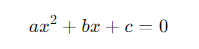
    A quadratic equation is a polynomial equation of the form:ax2+bx+c=0ax^2 + bx + c = 0ax2+bx+c=0

    where aaa, bbb, and ccc are constants, and xxx represents an unknown variable. The highest degree (or exponent) of xxx is 2, which defines it as a quadratic equation.

    • If a=0a = 0a=0, the equation becomes linear.
    • If a≠0a \neq 0a=0, the equation forms a parabola when graphed.

    Solving Quadratic Equations

    There are several methods to solve quadratic equations, each with its advantages depending on the specific equation.

    1. Factoring: Factoring is one of the simplest methods, but it only works for certain equations. You rewrite the quadratic equation in a factorized form:ax2+bx+c=(mx+n)(px+q)=0ax^2 + bx + c = (mx + n)(px + q) = 0ax2+bx+c=(mx+n)(px+q)=0To solve the equation, set each factor to zero and solve for xxx:(mx+n)=0or(px+q)=0(mx + n) = 0 \quad \text{or} \quad (px + q) = 0(mx+n)=0or(px+q)=0Example:x2−5x+6=0⇒(x−2)(x−3)=0x^2 – 5x + 6 = 0 \quad \Rightarrow \quad (x – 2)(x – 3) = 0x2−5x+6=0⇒(x−2)(x−3)=0The solutions are x=2x = 2x=2 and x=3x = 3x=3.
    1. Factoring Quadratics – Khan Academy
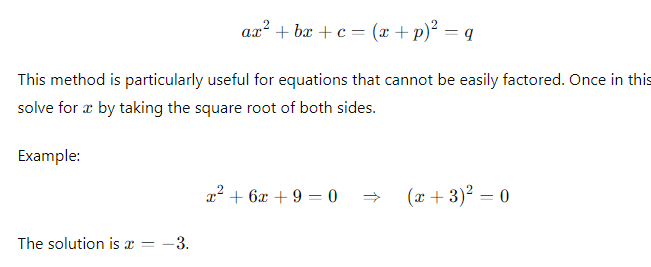
    2. Completing the Square: Completing the square is a method that transforms the quadratic equation into a perfect square trinomial:ax2+bx+c=(x+p)2=qax^2 + bx + c = (x + p)^2 = qax2+bx+c=(x+p)2=qThis method is particularly useful for equations that cannot be easily factored. Once in this form, solve for xxx by taking the square root of both sides.Example:x2+6x+9=0⇒(x+3)2=0x^2 + 6x + 9 = 0 \quad \Rightarrow \quad (x + 3)^2 = 0x2+6x+9=0⇒(x+3)2=0The solution is x=−3x = -3x=−3.

    Completing the Square – Math Is Fun

    1. Quadratic Formula: The quadratic formula is a universal method that works for any quadratic equation:x=−b±b2−4ac2ax = \frac{-b \pm \sqrt{b^2 – 4ac}}{2a}x=2a−b±b2−4ac​​Here, the discriminant (b2−4acb^2 – 4acb2−4ac) determines the nature of the solutions:
      • If b2−4ac>0b^2 – 4ac > 0b2−4ac>0, there are two real solutions.If b2−4ac=0b^2 – 4ac = 0b2−4ac=0, there is one real solution.If b2−4ac<0b^2 – 4ac < 0b2−4ac<0, there are two complex (imaginary) solutions.
      Example:2×2+3x−2=0⇒x=−3±32−4(2)(−2)2(2)2x^2 + 3x – 2 = 0 \quad \Rightarrow \quad x = \frac{-3 \pm \sqrt{3^2 – 4(2)(-2)}}{2(2)}2×2+3x−2=0⇒x=2(2)−3±32−4(2)(−2)​​The solutions are x=−3+254=0.5x = \frac{-3 + \sqrt{25}}{4} = 0.5x=4−3+25​​=0.5 and x=−3−254=−2x = \frac{-3 – \sqrt{25}}{4} = -2x=4−3−25​​=−2.
    1. Quadratic Formula – BBC Bitesize

    The Discriminant

    The discriminant (b2−4acb^2 – 4acb2−4ac) is an important part of the quadratic formula because it tells you how many solutions the equation has, and whether those solutions are real or complex.

    1. Understanding the Discriminant – Varsity Tutors

    Graphing Quadratic Equations

    Quadratic equations are often represented graphically as parabolas. The general shape of a parabola depends on the value of aaa:

    • If a>0a > 0a>0, the parabola opens upwards (U-shaped).
    • If a<0a < 0a<0, the parabola opens downwards (inverted U-shaped).

    Key features of a parabola include:

    • Vertex: The highest or lowest point on the graph.
    • Axis of Symmetry: The vertical line that passes through the vertex.
    • Roots or x-intercepts: The points where the parabola intersects the x-axis (i.e., the solutions of the equation).

    The vertex of a parabola can be found using the formula:xvertex=−b2ax_{\text{vertex}} = \frac{-b}{2a}xvertex​=2a−b​

    Applications of Quadratic Equations

    Quadratic equations are used in a variety of real-world scenarios:

    1. Projectile Motion: The path of a projectile (like a ball being thrown) follows a quadratic equation, where the height of the object is a function of time. Example: The equation h(t)=−4.9t2+vt+h0h(t) = -4.9t^2 + vt + h_0h(t)=−4.9t2+vt+h0​ describes the height of a projectile in terms of time ttt, initial velocity vvv, and initial height h0h_0h0​.
    2. Optimization Problems: Quadratic equations are often used to find maximum or minimum values in optimization problems, such as finding the best price to sell a product or determining the maximum area for a given perimeter.
    3. Area Calculations: Quadratics can be used to calculate areas of geometric shapes when they involve squared dimensions.

    Conclusion

    Quadratic equations are a critical component of IGCSE Mathematics. Mastering the different methods of solving quadratics, understanding the discriminant, and learning how to apply them in real-life situations will help you succeed in math and beyond. Whether through factoring, completing the square, or using the quadratic formula, you’ll have the tools you need to solve any quadratic equation with confidence.

  • Mathematics: Understanding Trigonometry

    Mathematics: Understanding Trigonometry

    Understanding Trigonometry

    Understanding Trigonometry

    Mathematics: Understanding Trigonometry is a crucial topic in the IGCSE Mathematics syllabus that deals with the
    relationships between angles and sides of triangles, particularly right-angled triangles. These relationships form the foundation for understanding various real-world problems, including navigation, architecture, and engineering. In this article, we will cover the basics of trigonometry, including trigonometric ratios, solving triangles, and applying trigonometry to real-life situations.

    What is Trigonometry?

    Trigonometry is the branch of mathematics that studies the relationships between the angles and lengths of triangles. Specifically, it focuses on right-angled triangles, where one angle is 90∘90^\circ90∘. In trigonometry, we explore how the angles of a triangle relate to the lengths of the sides.

    The three main trigonometric functions, or ratios, are:

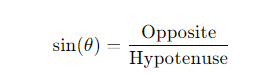
    • Sine (sin): The ratio of the opposite side to the hypotenuse.
    • Cosine (cos): The ratio of the adjacent side to the hypotenuse.
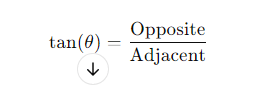
    • Tangent (tan): The ratio of the opposite side to the adjacent side.

    These ratios allow us to solve for unknown sides or angles in right-angled triangles when some information is already known.

    Trigonometric Ratios

    Mathematics: Understanding Trigonometry

    The three basic trigonometric ratios are fundamental in solving problems related to triangles. Here is how they are defined for a right-angled triangle:

    1. Sine:sin⁡(θ)=OppositeHypotenuse\sin(\theta) = \frac{\text{Opposite}}{\text{Hypotenuse}}sin(θ)=HypotenuseOpposite​The sine of an angle is the ratio between the length of the side opposite the angle and the hypotenuse.
    1. Cosine:cos⁡(θ)=AdjacentHypotenuse\cos(\theta) = \frac{\text{Adjacent}}{\text{Hypotenuse}}cos(θ)=HypotenuseAdjacent​The cosine of an angle is the ratio of the length of the adjacent side to the hypotenuse.
    1. Tangent:tan⁡(θ)=OppositeAdjacent\tan(\theta) = \frac{\text{Opposite}}{\text{Adjacent}}tan(θ)=AdjacentOpposite​The tangent of an angle is the ratio between the side opposite the angle and the side adjacent to it.

    Solving Right-Angled Triangles

    Trigonometry is often used to solve right-angled triangles, where you may be required to find a missing side or angle.

    1. Finding a Side: Suppose you know one angle (other than the right angle) and one side of a right-angled triangle. You can use one of the trigonometric ratios to find a missing side. For example, if you know the angle θ\thetaθ and the length of the hypotenuse, you can find the opposite side using:sin⁡(θ)=OppositeHypotenuse⇒Opposite=sin⁡(θ)×Hypotenuse\sin(\theta) = \frac{\text{Opposite}}{\text{Hypotenuse}} \quad \Rightarrow \quad \text{Opposite} = \sin(\theta) \times \text{Hypotenuse}sin(θ)=HypotenuseOpposite​⇒Opposite=sin(θ)×Hypotenuse
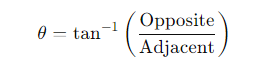
    1. Finding an Angle: To find an unknown angle, you can use the inverse of the trigonometric ratios. For instance, if you know the opposite and adjacent sides, you can find the angle θ\thetaθ using:θ=tan⁡−1(OppositeAdjacent)\theta = \tan^{-1} \left( \frac{\text{Opposite}}{\text{Adjacent}} \right)θ=tan−1(AdjacentOpposite​)
    1. Pythagoras’ Theorem: Another useful tool when solving triangles is Pythagoras’ Theorem, which states that in a right-angled triangle:a2+b2=c2a^2 + b^2 = c^2a2+b2=c2where aaa and bbb are the lengths of the two legs, and ccc is the length of the hypotenuse. This theorem allows you to find the length of one side when the other two sides are known.
    1. Solving Right-Angled Triangles – MathsIsFun

    The Unit Circle and Trigonometric Functions

    Understanding Trigonometry

    Beyond right-angled triangles, trigonometric functions are defined using the unit circle, a circle with a radius of 1 centered at the origin of the coordinate plane. The unit circle helps extend the definition of trigonometric functions to any angle, including those greater than 90∘90^\circ90∘.

    In the unit circle: Understanding Trigonometry

    • The x-coordinate of a point on the circle corresponds to the cosine of the angle.
    • The y-coordinate corresponds to the sine of the angle.
    • The tangent is the ratio of the sine to the cosine at any point on the circle.

    This concept is crucial in advanced trigonometry and has applications in areas like physics and engineering. Understanding Trigonometry

    Applications of Trigonometry in Real Life

    Trigonometry is used in many fields, from architecture to astronomy. Some common real-life applications include: Understanding Trigonometry

    1. Architecture and Engineering: Architects and engineers use trigonometry to calculate angles, lengths, and forces when designing structures such as bridges and buildings. For example, knowing the angles of inclination can help determine the height of a building or the length of a support beam.
    2. Navigation: Pilots and sailors use trigonometry to determine distances and plot courses. By calculating angles based on positions and distances, trigonometry helps in navigation over both land and sea.
    3. Physics and Astronomy: Trigonometry is essential for calculating the trajectories of objects, such as satellites or spacecraft, and for understanding the properties of waves, light, and sound.

    Trigonometric Identities

    Trigonometric identities are equations that are true for all values of the variables involved. These identities are useful in simplifying expressions and solving trigonometric equations. Understanding Trigonometry

    1. Pythagorean Identity:sin⁡2(θ)+cos⁡2(θ)=1\sin^2(\theta) + \cos^2(\theta) = 1sin2(θ)+cos2(θ)=1

    This identity is derived from the unit circle and is one of the most important identities in trigonometry.

    1. Tangent Identity:tan⁡(θ)=sin⁡(θ)cos⁡(θ)\tan(\theta) = \frac{\sin(\theta)}{\cos(\theta)}tan(θ)=cos(θ)sin(θ)​
    1. Reciprocal Identities:
    1. Trigonometric Identities – Math Open Reference

    Conclusion Understanding Trigonometry

    Trigonometry is a versatile and essential branch of mathematics that extends beyond the classroom and into real-world applications. By mastering the trigonometric ratios, solving triangles, and understanding the unit circle, students gain the tools needed for advanced mathematical studies and various practical applications in science, engineering, and architecture.

  • IGCSE Chemistry: The Chemistry of Acids, Bases, and Salts

    IGCSE Chemistry: The Chemistry of Acids, Bases, and Salts

    , bases, and salts are fundamental concepts in Chemistry and play a crucial role in various reactions, processes, and everyday applications. Understanding the properties, reactions, and uses of acids and bases, as well as how salts are formed, is a core component of the IGCSE Chemistry syllabus. This article will provide a detailed overview of these topics, exploring definitions, reactions, and real-world applications.

    What Are Acids and Bases?

    In Chemistry, and bases are substances that can donate or accept protons (H+^++ ions) in reactions. They are often classified based on their ability to either release hydrogen ions (for ) or hydroxide ions (for bases) when dissolved in water.

    1. : An acid is any substance that donates H+^++ ions when dissolved in water. Common examples include hydrochloric acid (HCl), sulfuric acid (H2_22​SO4_44​), and nitric acid (HNO3_33​). have a pH lower than 7, turn blue litmus paper red, and react with bases to form salts and water.
    2. Bases: A base is any substance that accepts H+^++ ions or releases hydroxide ions (OH−^-−) when dissolved in water. Sodium hydroxide (NaOH) and potassium hydroxide (KOH) are common bases. Bases have a pH greater than 7, turn red litmus paper blue, and react with to neutralize them.
    3. Alkalis: Alkalis are a specific type of base that is soluble in water and releases hydroxide ions (OH−^-−) in solution. Examples include sodium hydroxide and calcium hydroxide.

    Properties of Acids and Bases

    Understanding the properties of acids and bases helps explain their behavior in reactions and applications.

    1. Acid Properties:
      • Taste: have a sour taste (e.g., lemon juice contains citric acid).
      • Reaction with Metals: react with metals like zinc or magnesium to produce hydrogen gas.
      • Reaction with Carbonates: react with carbonates to produce carbon dioxide, water, and salt.
    2. Base Properties:

    The pH Scale

    The pH scale is used to measure the acidity or alkalinity of a solution. The scale ranges from 0 to 14, where:

    • pH < 7: Acidic solutions (e.g., lemon juice, vinegar)
    • pH = 7: Neutral solutions (e.g., pure water)
    • pH > 7: Alkaline solutions (e.g., soap solution)

    A universal indicator or pH paper can be used to determine the pH of a substance, changing color according to the pH value.

    Neutralization Reactions

    A neutralization reaction occurs when an acid and a base react to form water and a salt. This type of reaction is fundamental to many chemical processes, including digestion, industrial waste treatment, and agriculture.

    The general equation for a neutralization reaction is:Acid+Base→Salt+Water\text{Acid} + \text{Base} \rightarrow \text{Salt} + \text{Water}Acid+Base→Salt+Water

    For example, when hydrochloric acid reacts with sodium hydroxide, the products are sodium chloride (a salt) and water:HCl+NaOH→NaCl+H2OHCl + NaOH \rightarrow NaCl + H_2OHCl+NaOH→NaCl+H2​O

    Salts and Their Formation

    Salts are ionic compounds formed from the neutralization of an acid by a base. They consist of a positive ion (from the base) and a negative ion (from the acid).

    1. Common Types of Salts:
      • Sodium chloride (NaCl): Formed from hydrochloric acid and sodium hydroxide, it’s the most common salt, used in food seasoning.
      • Calcium carbonate (CaCO3_33​): Found in limestone and chalk, it is used in construction and manufacturing.
      • Ammonium sulfate (NH4)2SO4(NH_4)_2SO_4(NH4​)2​SO4​: Used as a fertilizer, formed from sulfuric acid and ammonia.
    2. Uses of Salts:
      • In Food: Salts like sodium chloride are essential in food preservation and flavoring.
      • In Industry: Salts like ammonium nitrate are used in fertilizers, while others are used in manufacturing and cleaning products.
      • Types and Uses of Salts – BBC Bitesize

    Applications of Acids and Bases

    1. In Industry:
      • Acids such as sulfuric acid are used in the manufacture of fertilizers, batteries, and detergents.
      • Bases like sodium hydroxide are used in soap production, paper manufacturing, and chemical synthesis.
    2. In Daily Life:

    Conclusion

    Understanding the chemistry of acids, bases, and salts is vital for grasping how many reactions occur in both industrial and biological systems. From the neutralization of stomach acid to the production of fertilizers, acids and bases play essential roles in daily life. The IGCSE syllabus ensures students are equipped with the knowledge to apply these concepts in practical and real-world contexts.

  • Advanced Concepts in IGCSE Organic Chemistry

    Advanced Concepts in IGCSE Organic Chemistry

    Advanced Concepts in IGCSE Organic Chemistry, as covered in the IGCSE syllabus, not only lays the foundation for understanding carbon-based compounds but also prepares students for more advanced chemistry concepts. As students progress, they encounter more intricate aspects of Organic Chemistry, which delve into the complexities of bonding, reactions, and the synthesis of larger molecules. This article explores advanced topics such as isomerism, polymerization, organic biochemistry, and the environmental impact of organic substances.

    Isomerism in Organic Chemistry

    “Advanced Concepts in IGCSE Organic Chemistry”

    Advanced Concepts in IGCSE Organic Chemistry Isomerism is a concept where compounds with the same molecular formula have different structural arrangements, resulting in different chemical and physical properties.

    1. Structural Isomerism: In this type, the atoms are arranged differently. For example, butane (C4H10C_4H_{10}C4​H10​) has two isomers: n-butane and isobutane, each having a different structure.
    2. Geometrical (Cis-Trans) Isomerism: Commonly seen in alkenes, geometrical isomerism arises from the restricted rotation around the carbon-carbon double bond. For example, in but-2-ene, the two methyl groups can either be on the same side (cis) or opposite sides (trans).
    Advanced Concepts in IGCSE Organic Chemistry

    Advanced Concepts in IGCSE Organic Chemistry Polymerization: The Chemistry of Plastics

    Polymerization is essential in industrial applications, particularly for creating plastics.

    1. Addition Polymerization: In this reaction, alkene monomers join to form long-chain polymers. Ethene (C2H4C_2H_4C2​H4​) forms polyethylene, a common plastic. Similarly, propene (C3H6C_3H_6C3​H6​) produces polypropylene.
    2. Uses of Polymers: Polymers are vital in daily life, from packaging to textiles. However, the rise in plastic waste has led to environmental issues, highlighting the need for biodegradable polymers.

    Organic Chemistry in Biochemistry

    Organic Chemistry forms the basis for biochemistry, which studies the organic molecules essential for life.

    1. Carbohydrates: Organic compounds like glucose are essential for energy. More complex carbohydrates, such as starch and cellulose, are made up of glucose monomers.
    2. Proteins: Proteins consist of amino acids, which include amine and carboxyl groups. Proteins function in enzymes, hormones, and cell structure.
    3. Lipids: Lipids are long hydrocarbon chains used for energy storage, insulation, and cell membranes.

    Environmental Impact of Organic Compounds

    While organic compounds are essential, they can also negatively impact the environment.

    1. Greenhouse Gases: Methane (CH4CH_4CH4​), an organic compound, is a potent greenhouse gas that contributes to climate change.
    2. Plastic Pollution: The widespread use of non-biodegradable plastics has created severe pollution issues, affecting marine life and ecosystems.
    3. Organic Pollutants: Organic pollutants, such as pesticides, can accumulate in ecosystems and affect the food chain.

    The Role of Organic Chemistry in Medicine

    Organic Chemistry plays a crucial role in drug design and synthesis, impacting healthcare worldwide. Advanced Concepts in IGCSE Organic Chemistry

    1. Synthesis of Medicines: Many medicines are organic compounds. Aspirin, for example, is synthesized by esterifying salicylic acid.
    2. Antibiotics: Organic compounds like penicillin revolutionized medicine by providing effective treatments for bacterial infections.
    3. Vitamins and Hormones: Organic compounds also include vital substances like vitamins and hormones, which regulate various bodily functions.

    Conclusion Advanced Concepts in IGCSE Organic Chemistry

    Organic Chemistry, especially as studied in the IGCSE syllabus, is an essential field that influences multiple aspects of life and industry. From understanding hydrocarbons and polymers to exploring the environmental challenges posed by organic compounds, students learn how chemistry shapes the world. Mastering these concepts opens up possibilities for tackling pressing global issues, such as climate change and plastic pollution, while also contributing to innovations in medicine and biochemistry. Advanced Concepts in IGCSE Organic Chemistry

    By studying Organic Chemistry, students not only prepare for exams but also develop a deeper appreciation for the molecular mechanisms that govern the world around us. Advanced Concepts in IGCSE Organic Chemistry


    These external links provide further resources and reading materials for students to dive deeper into the various topics covered in this article. Advanced Concepts in IGCSE Organic Chemistry

  • Mastering IGCSE Chemistry: Unlock the Secrets of Organic Chemistry

    Mastering IGCSE Chemistry: Unlock the Secrets of Organic Chemistry

    IGCSE Chemistry – Organic Chemistry Organic Chemistry is one of the key areas covered in the IGCSE Chemistry syllabus, focusing on the study of carbon-containing compounds. Organic compounds are crucial because they form the basis of life and play a vital role in industries such as pharmaceuticals, agriculture, and materials science. This article will explore the essential topics in Organic Chemistry, including hydrocarbons, functional groups, chemical reactions, and the significance of organic compounds in everyday life.

    What is Organic Chemistry? IGCSE Chemistry – Organic Chemistry

    Organic Chemistry is the branch of chemistry that deals with the structure, properties, and reactions of compounds that IGCSE Chemistry – Organic Chemistrycontain carbon. Although carbon is the defining element in organic chemistry, organic compounds also commonly include hydrogen, oxygen, nitrogen, sulfur, and halogens. The versatility of carbon lies in its ability to form strong covalent bonds with many elements, leading to a vast array of molecules with different chemical properties and functions.

    In the IGCSE curriculum, Organic Chemistry introduces students to simple hydrocarbons and their derivatives. The course emphasizes both understanding the fundamental principles and applying that knowledge to real-world situations.

    IGCSE Chemistry - Organic Chemistry

    Hydrocarbons: Alkanes and Alkenes

    The simplest organic compounds are hydrocarbons, which are molecules made entirely of hydrogen and carbon atoms. They are classified into different families based on their bonding and structure.

    1. Alkanes: Alkanes are the simplest type of hydrocarbon, consisting of only single bonds between carbon atoms. They are saturated hydrocarbons because each carbon atom forms four single covalent bonds, either with hydrogen atoms or other carbon atoms. The general formula for alkanes is CnH2n+2C_nH_{2n+2}Cn​H2n+2​. Examples include methane (CH4CH_4CH4​), ethane (C2H6C_2H_6C2​H6​), and propane (C3H8C_3H_8C3​H8​). IGCSE Chemistry – Organic Chemistry

    Alkanes are generally unreactive due to the strength of the carbon-carbon and carbon-hydrogen bonds, but they can undergo combustion, producing carbon dioxide and water. This makes them useful as fuels in everyday life.

    1. Alkenes: Alkenes are unsaturated hydrocarbons that contain at least one carbon-carbon double bond. Their general formula is CnH2nC_nH_{2n}Cn​H2n​. The presence of the double bond makes alkenes more reactive than alkanes. Ethene (C2H4C_2H_4C2​H4​) and propene (C3H6C_3H_6C3​H6​) are common examples of alkenes. IGCSE Chemistry – Mastering IGCSE ChemistryChemistry

    Alkenes can undergo addition reactions due to the double bond, making them valuable in industrial processes such as polymerization. For example, ethene is the starting material for polyethylene, a common plastic used in packaging and containers. Mastering IGCSE Chemistry

    Mastering IGCSE Chemistry

    (IGCSE Chemistry – Organic Chemistry )

    Functional Groups Mastering IGCSE Chemistry

    A key concept in Organic Chemistry is the idea of functional groups, which are specific groups of atoms within molecules that are responsible for the characteristic chemical reactions of those molecules. Some important functional groups covered in the IGCSE syllabus include: Mastering IGCSE Chemistry

    1. Alcohols: The alcohol functional group is characterized by an OHOHOH (hydroxyl) group attached to a carbon atom. Alcohols have the general formula CnH2n+1OHC_nH_{2n+1}OHCn​H2n+1​OH. Ethanol (C2H5OHC_2H_5OHC2​H5​OH) is a common example, widely used in beverages, as a fuel, and in solvents. Alcohols can undergo combustion, oxidation, and other reactions.
    2. Carboxylic Acids: Carboxylic acids contain the carboxyl group (COOHCOOHCOOH) and have the general formula CnH2n+1COOHC_nH_{2n+1}COOHCn​H2n+1​COOH. They are weak acids and can react with bases to form salts. Ethanoic acid (CH3COOHCH_3COOHCH3​COOH), commonly known as acetic acid, is a well-known carboxylic acid used in vinegar.
    3. Esters: Esters are formed from the reaction between an alcohol and a carboxylic acid, resulting in the ester functional group (COOCOOCOO). Esters are known for their pleasant, fruity smells and are often used in fragrances and flavorings.

    Reactions of Organic Compounds Mastering IGCSE Chemistry

    Organic compounds can undergo a wide variety of chemical reactions, but some of the most important ones covered in the IGCSE syllabus are:

    1. Combustion: As mentioned earlier, hydrocarbons like alkanes and alkenes can undergo combustion reactions, which are highly exothermic. Complete combustion of a hydrocarbon in the presence of excess oxygen produces carbon dioxide and water, while incomplete combustion may lead to carbon monoxide and soot (carbon) as byproducts.
    2. Addition Reactions: Alkenes, with their double bonds, are highly reactive in addition reactions. In an addition reaction, the double bond is broken, and new atoms or groups are added to the carbon atoms. For example, when bromine water is added to an alkene, the bromine atoms add across the double bond, decolorizing the bromine water, which is a common test for unsaturation.
    3. Esterification: This is a key reaction between a carboxylic acid and an alcohol to form an ester and water. The reaction is usually catalyzed by an acid, such as sulfuric acid. Esterification is an important industrial process for producing esters used in perfumes, solvents, and plasticizers.
    4. Oxidation: Alcohols can be oxidized to form carboxylic acids. For example, ethanol can be oxidized to ethanoic acid, either by chemical reagents like potassium dichromate or by biological processes in fermentation.

    Polymers and Plastics

    A significant application of Organic Chemistry is in the production of polymers. Polymers are large molecules made up of repeating units called monomers. The IGCSE syllabus covers addition polymers, which are formed from alkenes.

    1. Addition Polymerization: In this reaction, small alkene molecules (monomers) react together to form long-chain polymers. For instance, ethene undergoes addition polymerization to form polyethylene, one of the most common plastics used worldwide.
    2. Uses of Polymers: Polymers are used in various industries, including packaging, textiles, and electronics. Understanding the chemistry behind polymers helps in addressing environmental issues such as plastic waste, as it opens the door to developing biodegradable alternatives.

    Importance of Organic Chemistry

    Mastering IGCSE Chemistry Chemistry is crucial to many aspects of modern life. From the production of fuels and plastics to the creation of medicines and food additives, organic compounds are essential in numerous industries. By understanding the chemistry behind these compounds, students can appreciate the science that impacts everything from healthcare to environmental sustainability.

    In summary, IGCSE Organic Chemistry provides a foundational understanding of hydrocarbons, functional groups, and the chemical reactions of organic compounds. Mastering this subject equips students with knowledge that is applicable in many scientific and industrial contexts, fostering a deeper appreciation for the role of chemistry in our world.

    Here are some external links you can include in your article on IGCSE Organic Chemistry: Mastering IGCSE Chemistry

    1. Cambridge IGCSE Chemistry Syllabus
    2. Khan Academy – Organic Chemistry Basics
    3. BBC Bitesize – Organic Chemistry
    4. Chemguide – Organic Chemistry
    5. Royal Society of Chemistry – Organic Chemistry Resources
    6. IGCSE Study Guide: Organic Chemistry

    These links provide additional information and resources for students studying IGCSE Organic Chemistry.

    Mastering IGCSE Chemistry

  • Boost Your IGCSE Success: How AI Can Transform Your Study Skills

    Boost Your IGCSE Success: How AI Can Transform Your Study Skills

    Introduction (AI in education)

    Artificial Intelligence (AI) is revolutionizing the way students prepare for exams and learn new concepts. For IGCSE students, balancing multiple subjects and managing workloads can be overwhelming, but AI tools can streamline your study process, making it more personalized, efficient, and effective. In this article, we will discuss how AI can help you improve your study skills, manage your time, and prepare for IGCSE exams with ease. By integrating AI-powered tools into your routine, you can boost your study efficiency and achieve better results.

    AI in education

    1. Using AI for Personalized Learning

    One of the most impactful ways AI can improve your study habits is through personalized learning. Traditional learning methods often adopt a one-size-fits-all approach, which may not be suited for every student’s learning style. AI-based platforms such as Khan Academy and Quizlet analyze your performance, detect weaknesses, and offer tailored learning paths.

    For instance, if you consistently struggle with a particular math concept, these platforms will focus more on that topic, offering additional resources and quizzes to help you improve. This adaptive learning ensures that you’re not wasting time on topics you’ve already mastered, allowing you to focus on areas where you need more practice.

    External Link: Khan Academy’s AI-driven learning platform

    Moreover, AI tools can simulate one-on-one tutoring sessions, making learning accessible anytime, anywhere. No more waiting for a teacher’s guidance; AI tools will always be available to provide instant feedback and explanations, adapting to your unique learning pace.


    2. Enhancing Time Management with AI

    Time management is a critical skill for IGCSE students who must juggle multiple subjects. Fortunately, AI can assist in creating structured study schedules tailored to your exam dates and learning needs. Apps like Forest and Focusmate allow you to break down your study time into focused sessions, helping you maintain concentration.

    More advanced AI tools such as Notion AI can create personalized study timetables that adjust dynamically based on your upcoming exams, class schedules, and assignment deadlines. These apps ensure you allocate appropriate time for each subject, avoiding last-minute cramming.

    Tip: Use AI apps to generate a daily or weekly timetable. AI systems like Google Calendar can integrate with your school’s syllabus, providing reminders of important due dates and breaking down study tasks into manageable chunks.

    This automated scheduling saves time and allows you to prioritize critical subjects, ensuring balanced preparation across all IGCSE topics.


    3. AI for Smart Note-Taking and Summarization

    Efficient note-taking is essential for IGCSE success, and AI tools are invaluable for this task. Apps such as Grammarly and Notion offer features to improve note organization and clarity. They automatically highlight key concepts, correct errors, and suggest improvements for better readability.

    AI-based summarization tools are particularly useful for condensing long chapters and notes. By extracting the most relevant points, AI tools ensure that you focus only on essential information. This is especially helpful when reviewing subjects like history or biology, where volumes of content can be overwhelming.

    Additionally, AI tools like Notion AI allow you to organize your notes by subject or topic. You can create folders for each IGCSE subject, making it easier to revise material at a glance.


    4. Improving Memory Retention Through AI

    AI can dramatically improve memory retention, a critical aspect of IGCSE exam preparation. Tools such as Anki and Quizlet use spaced repetition algorithms to optimize your learning. This technique ensures that you review information at increasing intervals, helping to embed knowledge in your long-term memory.

    For example, if you’re preparing for biology, the system will track your progress and reintroduce questions based on how well you’ve mastered the material. It will repeat challenging content more frequently, while slowly phasing out topics you’ve already mastered.

    This personalized approach allows you to study more efficiently and ensures that no topic is neglected. The ability to track your learning progress also provides motivation, as you can see improvements over time.

    External Link: Explore how Anki uses AI for spaced repetition


    5. AI for Comprehensive Exam Preparation

    Preparing for exams is one of the most stressful aspects of the IGCSE journey, but AI can significantly ease this burden. Platforms like ExamPro and Uplearn leverage AI to analyze past exam questions and generate personalized quizzes. These tools identify common question types and topics, helping you focus on likely exam content.

    Additionally, AI-powered tools can simulate exam conditions, allowing you to practice time management and problem-solving skills. By repeatedly taking AI-generated mock tests, you’ll become more comfortable with exam formats and improve your performance under timed conditions.

    By integrating AI-powered platforms into your IGCSE exam preparation, you’ll gain a deeper understanding of how to approach questions, eliminate errors, and maximize your marks.

    Tip: Combine AI tools with past IGCSE papers to create a holistic exam prep strategy. These papers, along with AI’s predictive power, will give you a comprehensive overview of potential exam questions.


    Conclusion

    Incorporating AI into your IGCSE study routine can dramatically improve your efficiency, memory retention, and exam preparation. From personalized learning plans and smart note-taking to advanced exam simulations, AI tools are designed to help students like you succeed. Embrace AI to study smarter, not harder, and watch your results improve.

    Whether you’re looking to boost your grades, manage your time better, or simply streamline your study process, AI can be a game-changer in your IGCSE journey.

    External Link: Discover more about AI in education

  • How to Pass Cambridge Grade 1 with an A+: A Step-by-Step Guide for Students and Parents

    How to Pass Cambridge Grade 1 with an A+: A Step-by-Step Guide for Students and Parents

    Cambridge Grade 1

    Cambridge Grade 1

    The early years of education are critical in shaping a child’s academic journey. Cambridge Grade 1 lays the foundation for all future learning, and helping your child achieve an A+ in this stage can build their confidence and motivation for years to come. In this guide, we’ll walk you through a step-by-step approach for both students and parents to ensure success in

    How to Pass Cambridge Grade 1 with an A+: A Step-by-Step Guide for Students and Parents empowers you with a comprehensive approach to ensure success in Cambridge Grade 1.

    Cambridge Grade 1.

    Step 1: Create a Structured Learning Environment

    A structured learning environment is essential to foster your child’s academic growth. The first step toward success is establishing a consistent and organized space for learning.

    For Parents:

    • Set Up a Study Space: Designate a quiet, clutter-free area for your child to study and do homework. Make sure the space is well-lit and equipped with all the necessary supplies, such as pencils, notebooks, and educational materials.
    • Develop a Routine: Children thrive on routines. Establish a regular study time each day that your child can follow. Keep this time distraction-free and encourage focus. Cambridge Grade 1

    For Students:

    • Get Organized: Keep your books, papers, and materials neatly organized. Use folders for each subject to ensure everything is easy to find when you need it.
    • Be Consistent: Make a habit of studying at the same time every day. Routine is key to staying on track with schoolwork and preparing for exams. Cambridge Grade 1

    Step 2: Focus on Core Subjects

    In Cambridge Grade 1, students are introduced to core subjects such as English, Math, and Science. Building a strong foundation in these subjects is crucial for achieving an A+.

    English:

    • Reading: Encourage daily reading. Choose age-appropriate books that are both fun and educational. Parents can read with their child to improve comprehension and pronunciation.
    • Phonics and Spelling: Phonics lays the groundwork for language skills. Practice sounding out words, focusing on blending and segmenting sounds. Make spelling practice fun by turning it into a game with flashcards or spelling challenges.

    Math:

    • Practice Basic Arithmetic: Help your child practice counting, addition, and subtraction. Use everyday items, such as toys or food, to make math interactive and relatable.
    • Shapes and Patterns: Incorporate shapes and patterns into playtime. Whether it’s sorting toys by shape or drawing different patterns, this helps develop math skills in a fun way.

    Science:

    • Explore the World Around You: Encourage curiosity by taking nature walks or doing simple experiments at home. Science at this level is all about observation and inquiry, so stimulate their curiosity about the world around them.
    • Use Visual Aids: Visuals help children understand scientific concepts better. Use charts, videos, or picture books to explain topics like weather, animals, and plants.

    Step 3: Practice, Practice, Practice!

    Regular practice is key to mastering any subject. Frequent revision helps students retain what they’ve learned and feel confident when exams approach.

    For Parents:

    • Download Free Resources: At home.notonlybook.com/, you can access free past papers, study guides, and worksheets specifically tailored for Grade 1 students. These resources help reinforce what your child is learning in class and prepare them for exams.
    • Set Small, Achievable Goals: Help your child set small goals, like completing a worksheet or mastering a particular topic. Celebrate these achievements to keep motivation high.

    For Students:

    • Practice Worksheets: Use the free resources available on home.notonlybook.com/ to practice. Completing a worksheet on your own will help build your confidence.
    • Ask for Help: If you find something difficult, don’t hesitate to ask a parent or teacher for help. It’s okay to need a little extra practice on tricky topics.

    Step 4: Engage in Interactive Learning

    Children learn best when they are actively engaged in their learning process. Make learning interactive and fun through games, hands-on activities, and group learning.

    For Parents:

    • Use Educational Apps: There are numerous apps available that make learning fun. These apps can help with everything from math problems to reading practice.
    • Group Learning: If possible, arrange playdates or group study sessions with other children in the same grade. Collaborative learning can enhance understanding and encourage social development.

    For Students:

    • Learning Through Play: You can learn a lot while playing. Games that involve math, reading, or problem-solving can help you get better at school while having fun.
    • Be Creative: Use crayons, colored pencils, and paper to draw things you’re learning about. Whether it’s a math problem or a story from your reading book, being creative can help you remember what you learn.

    Step 5: Stay Positive and Encourage Growth

    A positive attitude is crucial when it comes to learning. Both students and parents need to focus on growth and improvement rather than perfection.

    For Parents:

    • Praise Effort Over Results: It’s important to praise your child for their effort, not just their grades. This fosters a growth mindset and encourages them to keep trying, even when they face challenges.
    • Stay Involved: Attend parent-teacher meetings and stay informed about your child’s progress. Engage with their teachers to understand where extra support might be needed.

    For Students:

    • Celebrate Successes: Every time you learn something new or complete a worksheet, celebrate! Give yourself a high-five or a pat on the back. It feels good to make progress.
    • Never Give Up: Sometimes learning is hard, but that’s okay. If you don’t understand something right away, take a break, ask for help, and keep trying.

    Step 6: Prepare for Exams with Confidence

    Exam time can be stressful, but with the right preparation, it doesn’t have to be. Help your child feel prepared by providing them with the right tools and mindset to succeed.

    For Parents:

    • Review Past Papers: Use past papers from home.notonlybook.com/ to familiarize your child with the format of the exam. Practicing with these papers will help them feel more confident when test day arrives.
    • Create a Calm Environment: Ensure that the days leading up to the exam are stress-free. Encourage your child to get plenty of rest, eat healthy meals, and take breaks from studying to avoid burnout.

    For Students:

    • Stay Calm and Focused: When the exam day comes, remember to stay calm and take your time. Read each question carefully and answer as best as you can.
    • Use What You’ve Learned: You’ve practiced a lot, and now it’s time to show what you’ve learned. Trust yourself, and remember that you’ve got this!

    Final Thoughts: Success with Notonlybook

    Helping your child pass Cambridge Grade 1 with an A+ is achievable with the right approach and resources. By creating a structured environment, focusing on core subjects, engaging in regular practice, and staying positive, both students and parents can make learning enjoyable and productive. With the free resources available on home.notonlybook.com/, you can access everything you need to support your child’s educational journey.

    Start today and set your child on the path to academic success with home.notonlybook.com/!

    vi

    Help your child pass Cambridge Grade 1 with an A+ by creating a structured environment, focusing on core subjects, engaging in regular practice, and staying positive. Access free resources on home.notonlybook.com/ to support your child's educational journey and set them on the path to academic success.

    Visit My Site 
    www.walidatiya.com

    1. Cambridge Assessment International Education – Primary Curriculum
      • Cambridge Primary Curriculum
      • This link provides an overview of the curriculum, including learning objectives, assessments, and teaching resources for primary grades.
    2. Cambridge Primary Progression Tests
      • Cambridge Progression Tests
      • This page outlines the assessments available for primary education, helping teachers track student progress.
    3. Cambridge International Examinations – Past Papers and Mark Schemes
    4. Education Resources & Support for Schools
    5. Cambridge Primary Blog
      • Cambridge Primary Blog
      • A blog that provides articles, community insights, and updates related to the Cambridge Primary curriculum and assessments.
    6. Cambridge International School Directory
      • Find a Cambridge School
      • This tool allows you to search for registered Cambridge schools worldwide, helpful for finding educational institutions offering the Cambridge curriculum.
    7. Resources for Parents
      • Supporting Learning at Home
      • Information and resources for parents to support their children’s learning at home, including tips and strategies.
    8. Cambridge University Press – Primary Books and Materials

  • How to Pass Cambridge Grade 8 with an A+: A Step-by-Step Guide for Students and Parents

    How to Pass Cambridge Grade 8 with an A+: A Step-by-Step Guide for Students and Parents

    How to Pass Cambridge Grade 8

    How to Pass Cambridge Grade 8

    Achieving an A+ in Cambridge Grade 8 across all subjects is no easy feat, but with the right strategies, hard work, and consistent effort, it’s absolutely possible! Whether you’re a student aiming for the highest grades or a parent helping your child through this critical stage, this guide offers valuable tips and tricks to help you prepare, study effectively, and excel in every subject.

    In this step-by-step guide, we’ll break down practical advice, subject-specific tips, and techniques for both students and parents to work together toward academic success.


    Step 1 How to Pass Cambridge Grade 8 : Establish a Study Routine and Stick to It

    One of the keys to academic success is consistency. Establishing a structured study routine helps students stay organized, manage time effectively, and prevent last-minute cramming.

    For Students: How to Pass Cambridge Grade 8

    • Create a Timetable: Plan out daily or weekly study schedules, allocating enough time for each subject. Be sure to include breaks to avoid burnout.
    • Study in Short Intervals: Use the Pomodoro technique—25 minutes of focused study followed by a 5-minute break. This helps improve concentration and retention.
    • Stay Consistent: Stick to your study routine as much as possible, even when exams seem far away. Regular review helps you retain information better.

    For Parents: How to Pass Cambridge Grade 8

    • Provide a Quiet Study Space: Ensure that your child has a quiet, comfortable environment where they can focus.
    • Monitor Progress: Periodically check in to see if your child is sticking to their study schedule and help adjust the routine if needed.

    Step 2: Know Your Syllabus Inside and Out

    Before diving into any subject, it’s crucial to understand the Cambridge syllabus. The syllabus provides an overview of what students need to know and what will be assessed in exams.

    For Students:

    • Download the Syllabus: Familiarize yourself with each subject’s syllabus. Highlight key topics that require extra attention and focus on them.
    • Use Past Papers: Practicing with past papers is one of the best ways to prepare for exams. It helps you understand the format and the types of questions asked.

    For Parents:

    • Support with Study Materials: Help your child gather the right textbooks, online resources, and past papers. Many resources can be found online, including those at home.notonlybook.com/.
    • Encourage Reflection: After each study session, ask your child what they’ve learned and which areas they still find difficult.

    Step 3: Subject-Specific Tips and Tricks for Grade 8

    Each subject in Cambridge Grade 8 requires a slightly different approach to excel. Below are some tips and tricks to help students ace each subject.


    Mathematics: Master the Basics and Practice

    Mathematics is often a challenging subject for students, but with enough practice and understanding of core concepts, it can become one of the easiest subjects to score an A+ in.

    For Students:

    • Focus on Core Concepts: Master basic concepts like algebra, geometry, and trigonometry. These form the foundation of more advanced problems.
    • Daily Practice: Mathematics requires regular practice. Solve a variety of problems every day to strengthen your skills.
    • Use Formulas Wisely: Memorize essential formulas and learn how to apply them in different contexts. Create flashcards for quick review.

    For Parents:

    • Encourage Problem-Solving: Ask your child to explain the steps they took to solve a problem. This reinforces their understanding.
    • Use Online Resources: There are plenty of interactive math tools and quizzes available online that make learning more engaging.

    Science: Understand, Don’t Memorize

    Science subjects (Biology, Physics, and Chemistry) are all about understanding concepts, not just memorizing facts. Focusing on real-life applications can help students grasp these subjects better.

    For Students:

    • Break Down Complex Concepts: Use diagrams and visual aids to help understand difficult concepts in Physics and Biology. For Chemistry, focus on the periodic table and how elements interact.
    • Conduct Simple Experiments: Hands-on learning is key in science. Try simple experiments at home or in the lab to better understand practical aspects.
    • Make Use of Revision Guides: Cambridge revision guides often summarize key concepts in an easy-to-understand way. Use them for quick revision.

    For Parents:

    • Encourage Curiosity: Encourage your child to ask questions and explore scientific topics beyond the syllabus. This builds deeper understanding.
    • Help with Experiments: Assist with at-home experiments to make learning more interactive and fun.

    English: Develop Strong Reading and Writing Skills

    English requires a combination of reading comprehension, grammar, and writing skills. Excelling in this subject means building a strong foundation in both literature and language.

    For Students:

    • Read Regularly: Reading books, articles, and essays helps improve vocabulary, comprehension, and writing skills.
    • Practice Writing: Write essays and stories on different topics to improve structure, coherence, and grammar. Practice answering past paper questions.
    • Focus on Grammar: Strong grammar is essential in English. Practice grammar exercises daily to avoid making careless mistakes in exams.

    For Parents:

    • Encourage Reading: Provide a variety of reading materials that interest your child—novels, short stories, articles, etc.
    • Review Written Work: Offer constructive feedback on essays and help your child improve their writing structure and clarity.

    Social Studies: Relate Lessons to the Real World

    Social Studies is about understanding historical events, geography, and civics. Relating these subjects to current world events can help make learning more meaningful.

    For Students:

    • Use Mind Maps: Create mind maps to link events, concepts, and figures in history and geography. This will help you retain information better.
    • Keep Up with Current Events: Understanding the modern world helps with understanding historical and geographical concepts. Stay updated with news and try to relate it to what you’re learning.
    • Practice Essay Writing: Social Studies exams often require long-form answers. Practice writing clear, concise essays that cover key points.

    For Parents:

    • Discuss Current Events: Engage in discussions about world events and historical significance to deepen your child’s understanding of Social Studies.
    • Help with Essay Practice: Encourage your child to write practice essays and offer feedback on how they can improve their arguments and explanations.

    Step 4: Revise, Revise, Revise!

    Revision is key to retaining information. Start revising well before exams to avoid stress and cramming.

    For Students:

    • Use Past Papers: Past papers give you an idea of the exam format and common question types. Set a timer and simulate exam conditions when practicing.
    • Teach What You’ve Learned: One of the best ways to remember something is to teach it to someone else. Try explaining concepts to a family member or a study group.

    For Parents:

    • Help with Revision Plans: Work with your child to create a revision timetable that ensures all subjects are covered thoroughly.
    • Quiz Your Child: Use flashcards or short quizzes to test your child’s knowledge on various topics.

    Step 5: Stay Positive and Take Care of Yourself

    Lastly, remember that mental and physical well-being are just as important as academic preparation. Encourage a balanced approach to studying that includes relaxation and self-care.

    For Students:

    • Take Breaks: Overloading yourself with information can lead to burnout. Take regular breaks to relax and recharge.
    • Stay Active: Physical activity helps reduce stress and improves focus. Incorporate some form of exercise into your daily routine.

    For Parents:

    • Support Emotional Well-Being: Reassure your child that it’s okay to feel stressed or overwhelmed sometimes. Help them manage stress through relaxation techniques, breaks, and positive reinforcement.

    Conclusion: Achieving A+ Across All Subjects in Grade 8

    Success in Cambridge Grade 8 is achievable with the right preparation and mindset. By setting a consistent study routine, focusing on subject-specific strategies, and incorporating regular revision, students can confidently approach their exams and excel. Remember that learning is a journey, and with the support of parents and the right resources, every student has the potential to succeed.

    For access to free study materials, past papers, and more helpful resources, visit home.notonlybook.com/ and get started on your path to academic excellence today!

  • Free Grade 5 IGCSE Study – Worksheet Papers for Different Subjects – Download Now! Exciting

    Free Grade 5 IGCSE Study – Worksheet Papers for Different Subjects – Download Now! Exciting

    Grade 5 IGCSE Study - Worksheet

    Grade 5 IGCSE Study – Worksheet

    Are you looking for quality resources to help your child or students excel in Grade 5 IGCSE? You’ve come to the right place! At home.notonlybook.com/, we are committed to offering top-notch educational resources to make learning engaging, effective, and accessible. With a wide range of free downloadable study and worksheet papers for various subjects, we ensure that students have the support they need to succeed in their academic journey.

    In this article, we’ll dive into the benefits of using high-quality study materials and worksheets, how to access them on home.notonlybook.com/, and why these resources are essential for every student’s growth.


    In this article, we’ll dive into the benefits of using high-quality study materials and worksheets, how to access them on home.notonlybook.com/, and why these resources are essential for every student’s growth.

    In this article, we’ll dive into the benefits of using high-quality study materials and worksheets, how to access them on home.notonlybook.com/, and why these resources are essential for every student’s growth.

    In this article, we’ll dive into the benefits of using high-quality study materials and worksheets, how to access them on home.notonlybook.com/, and why these resources are essential for every student’s growth.

    In this article, we’ll dive into the benefits of using high-quality study materials and worksheets, how to access them on home.notonlybook.com/, and why these resources are essential for every student’s growth.

    Why Grade 5 Study and Worksheets Matter

    Grade 5 is a critical year in a student’s education, laying the foundation for future academic success. The transition from elementary to more advanced topics in subjects like math, science, and language arts can be challenging, but with the right support, students can thrive. High-quality study materials and worksheets play a crucial role in reinforcing classroom learning and enabling students to grasp complex concepts more effectively.

    Here’s how our study materials and worksheets can benefit Grade 5 IGCSE students:

    1. Practice Makes Perfect:
      Worksheets are an excellent way to practice what students have learned in class. They provide targeted exercises that focus on key concepts, helping students to refine their skills and gain confidence in subjects like math, science, and English.
    2. Understanding Core Concepts:
      Study guides help break down difficult topics into manageable pieces. At home.notonlybook.com/, we offer clear and concise explanations, examples, and practice questions, all tailored to the Grade 5 IGCSE curriculum.
    3. Interactive Learning:
      Our worksheets promote active learning by encouraging students to engage with the material. Whether it’s solving problems, answering questions, or conducting small experiments, these interactive activities deepen understanding and retention of the subject matter.
    4. Cater to Different Learning Styles:
      Every student learns differently. Some may excel through reading, while others may prefer hands-on activities. With a wide variety of resources available for download, including visual aids, problem-solving exercises, and written explanations, you can cater to your child’s individual learning style.

    In this article, we’ll dive into the benefits of using high-quality study materials and worksheets, how to access them on home.notonlybook.com/, and why these resources are essential for every student’s growth.

    In this article, we’ll dive into the benefits of using high-quality study materials and worksheets, how to access them on home.notonlybook.com/, and why these resources are essential for every student’s growth.

    In this article, we’ll dive into the benefits of using high-quality study materials and worksheets, how to access them on home.notonlybook.com/, and why these resources are essential for every student’s growth.

    In this article, we’ll dive into the benefits of using high-quality study materials and worksheets, how to access them on home.notonlybook.com/, and why these resources are essential for every student’s growth.

    In this article, we’ll dive into the benefits of using high-quality study materials and worksheets, how to access them on home.notonlybook.com/, and why these resources are essential for every student’s growth.

    In this article, we’ll dive into the benefits of using high-quality study materials and worksheets, how to access them on home.notonlybook.com/, and why these resources are essential for every student’s growth.

    What You’ll Find on home.notonlybook.com/

    At home.notonlybook.com/, we offer free study and worksheet papers across different Grade 5 IGCSE subjects, including:

    • Math:
      Our math worksheets cover a range of topics such as addition, subtraction, multiplication, division, fractions, geometry, and word problems. These exercises are designed to reinforce core math concepts and develop problem-solving skills.
    • Science:
      From biology to chemistry and physics, our science worksheets help students understand key scientific principles through engaging activities. We focus on concepts like the human body, ecosystems, forces, and simple machines.
    • English:
      Language arts worksheets include grammar exercises, reading comprehension tasks, and creative writing prompts. These materials aim to improve literacy, vocabulary, and communication skills.
    • Social Studies:
      In social studies, students can explore history, geography, and civics through interactive worksheets that encourage critical thinking and understanding of the world around them.

    How to Access Free Grade 5 IGCSE Resources

    Accessing these valuable resources is quick and easy. Simply visit home.notonlybook.com/, navigate to the Grade 5 section, and browse through the available study and worksheet papers for your chosen subjects. Each resource is free to download, and you can print or save them for offline use.

    Here’s how to get started:

    1. Visit the website: Head over to home.notonlybook.com/.
    2. Select your subject: Choose from subjects like math, science, English, and more.
    3. Download and start learning: Download the resources you need and begin using them right away!

    Why home.notonlybook.com/?

    At home.notonlybook.com/, we believe that every student deserves access to high-quality educational materials, no matter their background. That’s why all of our resources are available for free. Our mission is to empower students with the tools they need to succeed, and to provide parents and educators with reliable support to guide young learners.

    • Comprehensive resources: We cover all the core subjects, so you don’t have to search multiple websites for study materials.
    • Easy navigation: Our website is user-friendly, making it easy to find and download the materials you need in just a few clicks.
    • Free access: All resources are 100% free to use, download, and share, ensuring that no student is left behind due to lack of resources.

    Start Downloading Today!

    Empower your child or students with free Grade 5 IGCSE study materials and worksheets from home.notonlybook.com/. Whether you're looking for math exercises, science activities, or English grammar drills, we’ve got everything you need to support their learning journey.

    Don’t miss out – download your free resources today and help your students build the skills they need for future academic success.

    👉 Visit home.notonlybook.com/ and explore our collection now: home.notonlybook.com/